
Four centuries and many countries fit on this short shelf of the best classic novels of all time. Every pick changed what a novel could do and still reads well now, and each entry says plainly why it matters today.
A classic lasts because each new generation keeps finding itself in it. This list picks 10 novels that still reward a reader today, first published between 1605 and 1967. It is for readers who know the famous titles and want to know which to read first, and why. Each entry says what the book changed about the novel as a form, and how much patience it asks. The list crosses languages, continents and points of view, with one book per author. Four of the 10 were written in another language, so each entry names the translation behind its page count. Lengths run from 224 to 1,072 pages, and three books pass 800. That is real time, and the entries say so. If you want shorter, gentler picks, our list of classic books for beginners is the better place to begin.
Reads well now: the pace, voice and story still hold a reader today.
Form: the book changed what a novel could do, through its narrator, structure or realism.
Range: different languages, continents and centuries, with one book per author.
Relevance: a plain reason the book still matters to someone living now.
Our full method, including how we check every book fact against two sources, is on the How We Pick page.
As an Amazon Associate, TenVolumes earns from qualifying purchases.
10. Mrs. Dalloway, by Virginia Woolf
Best for: A whole life inside one London day
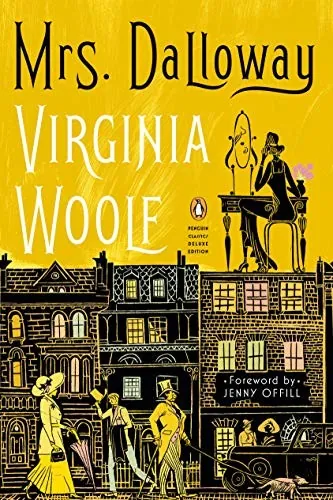
On a single June day in 1923, Clarissa Dalloway gets ready for the party she is giving that night in London. Elsewhere in the city, Septimus Warren Smith, a veteran with shell shock, is living through a very different day. Virginia Woolf follows both of them, and their two days run in parallel. Very little happens by way of plot, and that is the point.
The Hogarth Press published this modernist novel in 1925, and it showed that a book could hold whole lives inside one ordinary day. That experiment earns it a place among books that changed the form. It also makes this the hardest pick to settle into, because there are so few events to hold on to.
The Penguin Classics Deluxe paperback runs 240 pages, with a foreword by Jenny Offill. Give it an unhurried afternoon, ideally in one sitting.
Pages: 240 (Penguin Classics, 2021 edition)First published: 1925Literary fiction, modernist, classic
9. Invisible Man, by Ralph Ellison
Best for: A landmark American novel told from hiding
His name never appears. The young Black narrator moves from a Black college in the South to New York and Harlem, where a political group called the Brotherhood draws him in. He tells all of it in hindsight, from a room hidden underground. Ralph Ellison published the novel in 1952, and it won the National Book Award for Fiction the following year.
It was the only novel he published in his lifetime. On a list that crosses continents and centuries, it carries the American 20th century. Its point of view, a young Black man speaking from hiding, is unlike any other here. The commitment is the hurdle.
The Vintage International paperback runs 608 pages, which is a real investment for a first read. Readers curious about how American fiction has written about race should still put it near the top of their pile.
Pages: 608 (Vintage International, 1995 edition)First published: 1952Literary fiction, classicAwards: National Book Award for Fiction, 1953
8. Things Fall Apart, by Chinua Achebe
Best for: A compact classic from outside Europe and America
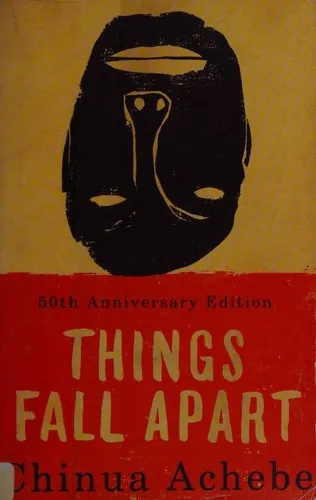
Okonkwo is a wrestling champion and a respected warrior in Umuofia, an Igbo clan in colonial Nigeria. Fear of being anything like his father, Unoka, shapes nearly every choice he makes. Chinua Achebe spends most of the book inside the clan's own customs, quarrels and ambitions. Christian missionaries and British rule arrive only in the later chapters.
The change hits hard because that earlier world feels so complete. Published in London in 1958, it is the one novel here told from inside an African community. The scope is narrow by design, one man and one clan, and it feels small beside the crowded canvases elsewhere on this list. Be aware that Okonkwo beats his wives and children.
At 224 pages in the Penguin Books edition, it is the shortest book on this list. It opens Achebe's African Trilogy, yet it stands complete on its own.
Pages: 224 (Penguin Books, 1994 edition)First published: 1958Literary fiction
7. Madame Bovary, by Gustave Flaubert
Best for: Readers who care how sentences are made
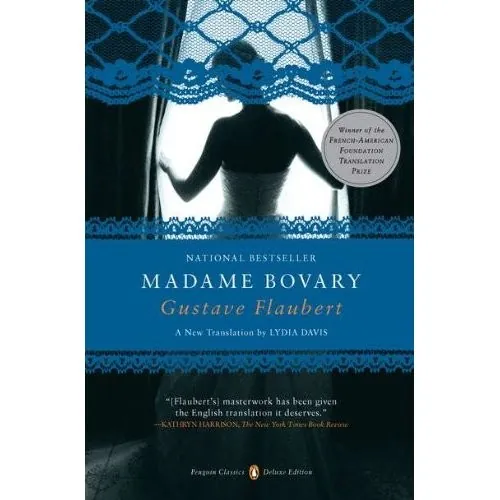
Emma, a farmer's daughter raised in a convent, marries Charles Bovary, a kind but dull country doctor in Normandy. She has read too many romantic novels, and life in the provinces around Rouen never measures up to them. Gustave Flaubert spent about five years writing and rewriting the book. The plot is simple, and the precision of the telling is the point.
When the novel ran as a serial in 1856, Flaubert was tried for offending public morals. He was acquitted in February 1857, the year it appeared as a book. On this list it represents the realist novel at its most exact. Emma is hard company, though, and Flaubert never asks you to like her.
Lydia Davis translated the Penguin Classics edition, which runs 384 pages. Anyone who writes, or who wants to see how a single scene is built word by word, will learn the most here.
Pages: 384 (Penguin Classics, 2011 edition)First published: 1857Literary fiction, realism, classic
6. Moby-Dick, by Herman Melville
Best for: An adventure that keeps breaking its own rules
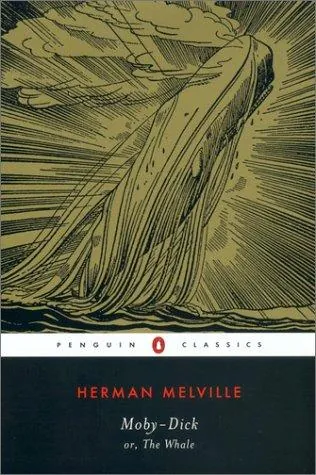
Ishmael signs on to the whaling ship Pequod and soon learns that Captain Ahab has a single purpose: revenge on a white whale. Herman Melville builds an adventure on that premise and then keeps wandering away from it. Whole chapters stop to classify whales or describe their anatomy, as though the novel also wanted to be an encyclopedia. No book here takes bigger risks with form.
It first appeared in London in 1851, under the title The Whale, and it sold poorly in Melville's lifetime. Critics revived it around the 1919 centenary of his birth.
The same digressions that make it original also test your patience, and the Penguin Classics edition runs 720 pages. On a first read, skimming the whaling chapters is a fair choice. Readers who love sea stories and strange, rolling sentences will find nothing else like it.
Pages: 720 (Penguin Classics, 2002 edition)First published: 1851Literary fiction, sea novel, classic
5. Don Quixote, by Miguel de Cervantes
Best for: The oldest pick and still the funniest
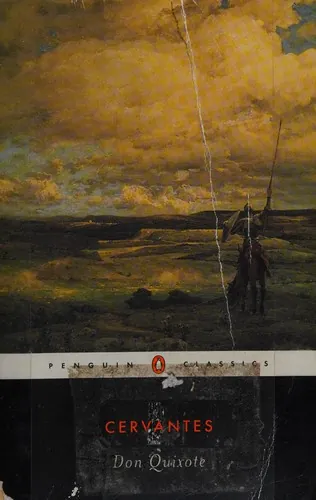
Another writer published a fake Part Two of this novel in 1614. Miguel de Cervantes struck back inside his own Part Two the following year. That game with books and readers feels surprisingly modern for a story whose first part appeared in 1605. Its hero is a minor nobleman from La Mancha who has read chivalric romances until he believes in them. He sets out as a knight-errant under the name Don Quixote, with a farm laborer, Sancho Panza, as his squire.
Cervantes plays the premise for comedy, then lets it grow sadder and stranger. This is the oldest novel on the list by more than 200 years. Its invention, and how funny the pair still are together, are the reasons to read it now. Length is the obstacle.
John Rutherford's translation for Penguin Classics runs 1,072 pages, the longest on this list. Treat it as a book of episodes and read a few chapters at a time.
Pages: 1072 (Penguin Classics, 2003 edition)First published: 1605Literary fiction, comic novel, classic
4. One Hundred Years of Solitude, by Gabriel García Márquez
Best for: Magic realism at its source
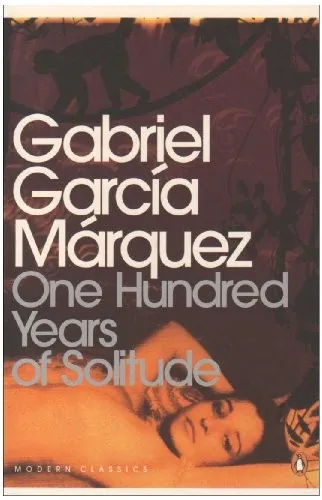
José Arcadio and Aureliano are names you will meet again and again, because the Buendías keep handing them down. Sketch a family tree as you go, since that repetition is the one real hurdle. The family's story starts with the founding of Macondo and runs to a seventh generation there. Gabriel García Márquez tells the impossible and the ordinary in the same calm voice, so neither gets more fuss than the other.
He published it in Spanish in 1967, and Gregory Rabassa's English translation followed in 1970. It is the newest book on this list. It is also widely regarded as one of the most influential novels written in Spanish in the 20th century. That matters here, because this is a leading example of magic realism, and few picks changed fiction so visibly.
It is the only one that reads like a family legend told around a table. The Penguin Modern Classics paperback runs 432 pages.
Pages: 432 (Penguin Modern Classics, 2000 edition)First published: 1967Literary fiction, magic realism, classic
3. Middlemarch, by George Eliot
Best for: A big ensemble novel of ordinary lives
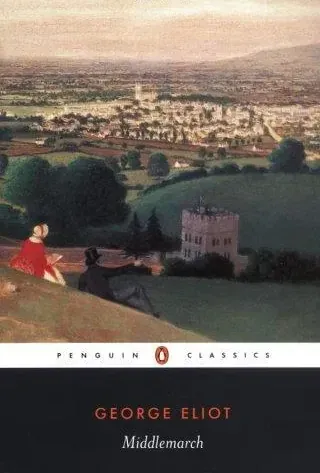
A fictional town in the English Midlands, just before the 1832 Reform Act, is the real subject here. George Eliot follows how each life in it presses on the others. Fred Vincy and Mary Garth carry one thread. Tertius Lydgate, an ambitious young doctor, carries another. Dorothea Brooke, an idealist who wants her life to do some good, carries the third.
The novel first appeared in eight parts in 1871 and 1872, subtitled A Study of Provincial Life. George Eliot was the pen name of Mary Ann Evans. Breadth of sympathy is its great strength. No other book on this list gives so many ordinary people such careful attention.
The Penguin Classics paperback runs 880 pages, and the early books are slow to set the town in place. If you love novels with many lives in them, choose this one next.
Pages: 880 (Penguin Classics, 2003 edition)First published: 1871Literary fiction, classic
2. Pride and Prejudice, by Jane Austen
Best for: Sharp comedy that needs no warm-up
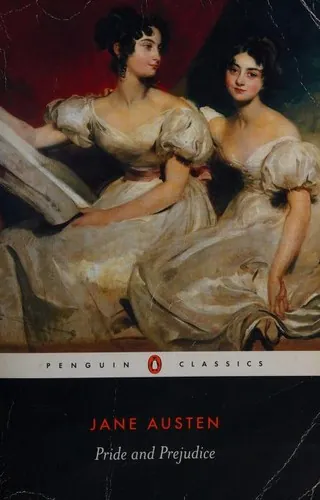
The Bennets have five daughters, and when a young man named Mr. Bingley takes a house nearby, their mother sees a chance. Jane Austen needs only a few chapters to set her whole social comedy in motion. Elizabeth Bennet and Mr. Darcy dislike each other after a bad first meeting at a ball, and the novel follows how that dislike gives way. Control is Austen's great gift.
Austen's irony works at the level of single sentences, and the dialogue still lands as comedy more than 200 years after its 1813 publication. The limit is range. Austen's world is deliberately small, a few families in the English countryside.
The Penguin Classics paperback runs 448 pages. Joe Wright's 2005 film is a good companion. Read the book first, though, since so much of the pleasure lives in the narrator's voice.
Pages: 448 (Penguin Classics, 2002 edition)First published: 1813Romance, comedy of mannersAdaptation: Film directed by Joe Wright, 2005
1. Anna Karenina, by Leo Tolstoy
Best for: The novel that does nearly everything
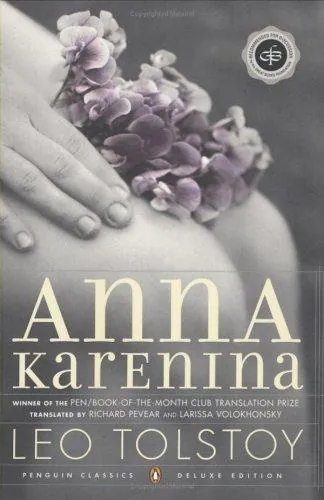
Stiva Oblonsky's wife has just discovered his affair when the novel opens. His sister, Anna Karenina, is drawn into that crisis and soon into one of her own, an affair with Count Vronsky, an officer. In a second story, Leo Tolstoy follows Levin, a landowner who feels more at home on his country estate than in society. The two plots run side by side, and each sheds light on the other. One asks what passion costs.
The other asks how to live a decent ordinary life. Tolstoy serialized the novel from 1875 to 1877 and published it as a book in 1878. Range is why it tops the list. It moves from the salons of Moscow and St. Petersburg to the work of an estate, and it still reads with real momentum.
The translation by Richard Pevear and Larissa Volokhonsky for Penguin Classics runs 864 pages. That length is the main caveat, but the eight parts make natural places to pause.
Pages: 864 (Penguin Classics, 2004 edition)First published: 1878Literary fiction, classic
| Rank | Title | Author | Year | Pages | Best for |
|---|---|---|---|---|---|
| 1 | Anna Karenina | Leo Tolstoy | 1878 | 864 | The novel that does nearly everything |
| 2 | Pride and Prejudice | Jane Austen | 1813 | 448 | Sharp comedy that needs no warm-up |
| 3 | Middlemarch | George Eliot | 1871 | 880 | A big ensemble novel of ordinary lives |
| 4 | One Hundred Years of Solitude | Gabriel García Márquez | 1967 | 432 | Magic realism at its source |
| 5 | Don Quixote | Miguel de Cervantes | 1605 | 1072 | The oldest pick and still the funniest |
| 6 | Moby-Dick | Herman Melville | 1851 | 720 | An adventure that keeps breaking its own rules |
| 7 | Madame Bovary | Gustave Flaubert | 1857 | 384 | Readers who care how sentences are made |
| 8 | Things Fall Apart | Chinua Achebe | 1958 | 224 | A compact classic from outside Europe and America |
| 9 | Invisible Man | Ralph Ellison | 1952 | 608 | A landmark American novel told from hiding |
| 10 | Mrs. Dalloway | Virginia Woolf | 1925 | 240 | A whole life inside one London day |
Frequently asked questions
What are the best classic novels to read first?
Start with Pride and Prejudice if you want comedy, or Things Fall Apart if you want something short. Both read easily for a modern reader. Move on to Anna Karenina or Middlemarch once you are ready for a longer commitment.
What are the best classic novels to read if I have little time?
The three shortest on this list are Things Fall Apart at 224 pages, Mrs. Dalloway at 240 and Madame Bovary at 384, in the editions we list. Mrs. Dalloway is short but demanding, so Things Fall Apart is the easiest quick read.
Does the translation matter for these classics?
Yes. Four of the 10 were written in Russian, Spanish or French, and a translation shapes the voice you hear. We list editions translated by Richard Pevear and Larissa Volokhonsky, Gregory Rabassa, John Rutherford and Lydia Davis, so the page counts match a specific text.
Why are War and Peace and Jane Eyre not on this list?
War and Peace is left out because we allow one book per author, and Tolstoy is represented here by Anna Karenina. Jane Eyre simply lost out on space and range. Both appear elsewhere on the site: War and Peace on our list of historical fiction, and Jane Eyre on our list of romance novels.