
Our picks for the best historical fiction books cover four continents and more than 2,000 years, and every entry names its period and place up front. In each one, the daily life and politics of the era drive the story, so the past feels lived in rather than decorated.
Good historical fiction does more than borrow a costume. It shows how people worked, argued and made money in a world with different rules. Then it makes those rules matter to the plot. The 10 books below do that across more than 2,000 years, from the Rome of Augustus to Japan in 1989. They cover four continents, because the past did not only happen in England. We wrote this list for adult readers who want a reliable starting shelf. Some of you are new to the genre, and some want the classics you missed. Each pick names the period and place it brings to life, so you can choose by era as easily as by rank. Be ready for length. Nothing here runs under 360 pages, and three books pass 850, so each entry says plainly how big a commitment it asks. Two are translations.
Period depth: daily life, work and politics of the era shape the plot, not just the scenery.
Story pull: the book keeps you reading for its characters and events, not for a history lesson.
Range: we chose different centuries, continents and authors, and no two books share a time and place.
Staying power: major prizes, decades in print, or a lasting place in reading lists and adaptations.
Our full method, including how we check every book fact against two sources, is on the How We Pick page.
As an Amazon Associate, TenVolumes earns from qualifying purchases.
10. Shōgun, by James Clavell
Best for: A long adventure in 1600 Japan
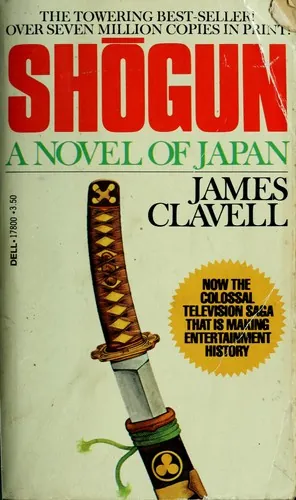
An English ship's pilot named John Blackthorne is wrecked on the coast of Japan in 1600. He lands in a power struggle among the daimyo, the great lords. The lord Toranaga stands at its center. James Clavell builds the whole novel on that collision between a stranger and a closed political world.
Few historical novels hand you an entire foreign society through one newcomer who has to learn it from scratch. There are two costs. Japan reaches us partly through Blackthorne's foreign eyes, and the book asks for stamina at 998 pages in the Delta paperback. It comes first in story order among the six novels of Clavell's Asian Saga, but it reads as a standalone. NBC made it into a miniseries in 1980, and FX released a new series in 2024. Fans of the newer show will find the full story here, told at its own pace.
Pages: 998 (Delta Trade Paperbacks, 2009 edition)First published: 1975Historical fiction, adventureAdaptation: NBC miniseries, 1980, and FX series, 2024
9. All the Light We Cannot See, by Anthony Doerr
Best for: Newcomers to historical fiction
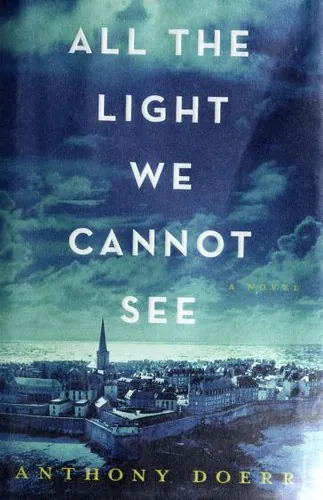
Both young leads in this novel are headed, without knowing it, for the siege of Saint-Malo in August 1944. Werner has no parents and comes from a German mining town. He has a self-taught knack for fixing radios. Marie-Laure is a Parisian girl who cannot see. She learns her part of the city from a scale model her father built.
Anthony Doerr cuts between them in short chapters, which keeps the 544 pages moving. That structure makes it the easiest way into this list for anyone who usually avoids long historical novels. You never need a map of the war to follow it. It won the Pulitzer Prize for Fiction in 2015, and Netflix released a limited series in 2023. Its view of the war is narrow by design. The main story runs from 1934 to 1944 through two young people, not through armies or politics. Readers who want the scope of War and Peace should look higher on the list. This is a war novel built around two private lives.
Pages: 544 (Scribner, 2017 edition)First published: 2014Historical fiction, World War IIAwards: Pulitzer Prize for Fiction, 2015Adaptation: Netflix limited series, 2023
8. Half of a Yellow Sun, by Chimamanda Ngozi Adichie
Best for: History told through one household
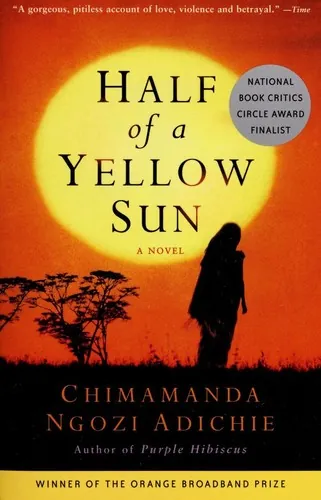
Two stretches of the 1960s alternate in this novel, the early years and the late ones, and between them lies the Nigeria-Biafra war. Olanna and an English writer named Richard carry two of the viewpoints. The third belongs to Ugwu, a village boy who works as houseboy for the lecturer Odenigbo in Nsukka. The story moves through Lagos and Umuahia as well. Chimamanda Ngozi Adichie sets a civil war inside a single household.
You learn the politics because the characters have to live with them, meal by meal and move by move. It won the Orange Prize for Fiction in 2007, now called the Women's Prize. A film followed in 2013. The jumps in time take a few chapters to settle. The later sections include war violence, starvation and a sexual assault scene. If you like history told from inside a household rather than a war room, this is your pick.
Pages: 543 (Anchor Books, 2007 edition)First published: 2006Historical fiction, literary fictionAwards: Orange Prize for Fiction, 2007Adaptation: Film, 2013
7. I, Claudius, by Robert Graves
Best for: Court intrigue in ancient Rome
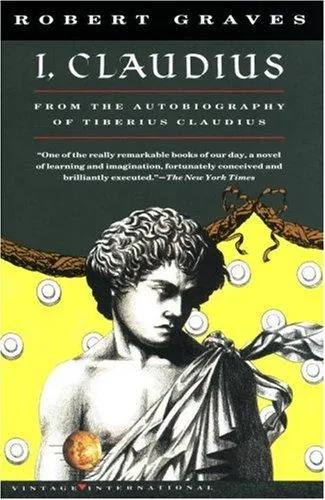
Family memoir is the form, and the family happens to rule Rome. Robert Graves hands the story to the emperor Claudius himself, a man with a stammer and a limp whose relatives write him off for years. That neglect is useful. He was in the room for the schemes of Livia, the wife of Augustus, and nobody watched what he saw. The span runs from 44 BC to AD 41 and takes in three emperors before him, yet the first-person voice keeps it personal.
Letting an overlooked insider tell it is why a novel from 1934 still carries the ancient world on this list. It won the James Tait Black Memorial Prize in 1934, and the BBC adapted it for television in 1976. The caveat is structure. The story continues in Claudius the God, published in 1935, so this volume stops partway through his life. If you want the whole life, plan on reading both books. Readers who enjoy court intrigue told by a watchful narrator will be well served.
Pages: 468 (Vintage International, 1989 edition)First published: 1934Historical fictionAwards: James Tait Black Memorial Prize, 1934Adaptation: BBC television series, 1976
6. Pachinko, by Min Jin Lee
Best for: Multigenerational family sagas
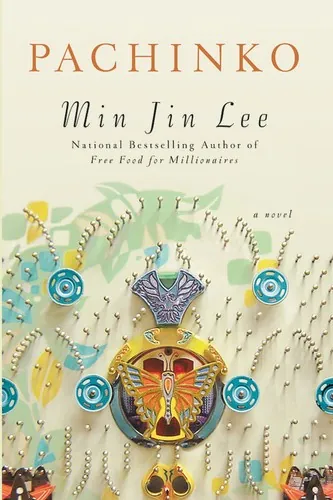
Sunja grows up in Yeongdo, near Busan, where her family keeps a boarding house. The novel opens in 1910, and she later moves to Osaka. From there Min Jin Lee follows Sunja's family across four generations, closing in 1989. Her subject is the life of Koreans in Japan, a place and a span of modern history that no other pick on this list touches.
The settings shift between Korea and Japan, from Busan to Osaka to Tokyo, so the scope grows as the family does. It was a National Book Award finalist in 2017, and Apple TV+ adapted it as a series in 2022. The caveat comes with the form. A saga that covers 79 years has to keep moving, so people you have come to know leave the story as new generations arrive.
Family-saga readers who want a setting new to them should begin here. At 512 pages, it is a commitment of a few weeks, not a few months.
Pages: 512 (Grand Central Publishing, 2017 edition)First published: 2017Historical fiction, family sagaAwards: National Book Award for Fiction finalist, 2017Adaptation: Apple TV+ series, 2022
5. The Name of the Rose, by Umberto Eco
Best for: Mystery fans who like ideas
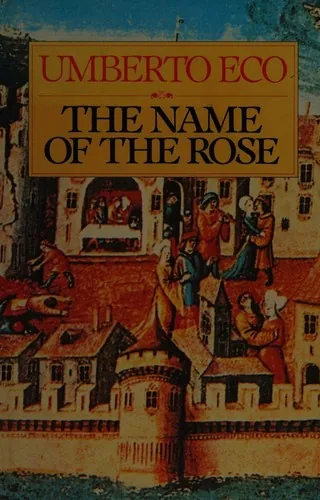
Medieval ideas do the work that clues do in most mysteries. The abbey library, the hunt for heresy and the Franciscan debate over poverty all feed the plot. It begins with a dead monk at a Benedictine abbey in northern Italy in 1327. A visiting Franciscan, William of Baskerville, and his young novice, Adso of Melk, are drawn into the question of how he died. No other book here lets an era's thinking drive the plot as directly as Umberto Eco's does.
William Weaver's English translation appeared in 1983. The caveat is that Eco leaves some Latin passages untranslated, so you will meet lines you cannot read. They rarely block the plot, but they do slow the page. The Mariner edition runs 579 pages and includes the author's postscript. It won the Strega Prize in Italy in 1981. A film followed in 1986 and a Rai 1 television series in 2019. Puzzle fans who also enjoy ideas will get the most from it.
Pages: 579 (Mariner Books, 2014 edition)First published: 1980Historical fiction, mysteryAwards: Strega Prize, 1981Adaptation: Film, 1986, and Rai 1 television series, 2019
4. War and Peace, by Leo Tolstoy
Best for: A long winter read with a big cast
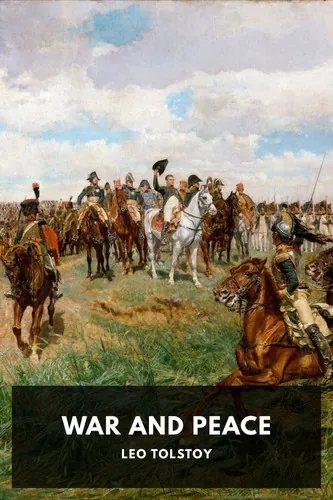
Several Russian noble families live through the Napoleonic Wars, from the campaign of 1805 to the French invasion of 1812. Pierre Bezukhov inherits a vast fortune early on. Prince Andrei Bolkonsky and Natasha Rostova anchor two other households, and the Rostovs' money slowly drains away. Leo Tolstoy sets their private lives beside the war and beside his own essays on what moves history. No other novel here shows a whole society at a turning point on this scale.
The Pevear and Volokhonsky translation, first published in 2007, is the one we list. Length is the obvious hurdle: 1,273 pages in this Vintage Classics edition. The history essays also gather in the later parts and the epilogue, which is set in 1820, so the pace slows near the end. You can skim them on a first pass and return later. It suits a long winter and a reader who enjoys a big cast. Keep a list of names nearby.
Pages: 1273 (Vintage Classics, 2008 edition)First published: 1869Historical fiction, classic
3. Beloved, by Toni Morrison
Best for: Book clubs and close readers
Memory sets the order of events in this novel, not the calendar. Toni Morrison keeps circling back to Sweet Home, the Kentucky farm Sethe escaped from, until the reader understands what she lived through. The present is 1873, near Cincinnati. Sethe and her daughter, Denver, share their house with the spirit of a dead baby. No other novel on this list makes the past feel so present.
History here is not scenery. It is a weight the characters carry into every room. Because the timeline loops, the opening chapters ask for patience, and the full picture arrives slowly. The book deals directly with the violence of slavery, including the killing of a child and sexual violence. Those scenes are hard to read. It won the Pulitzer Prize for Fiction in 1988 and was filmed in 1998.
The Everyman's Library hardcover runs 360 pages, short for this list. Read it slowly, and if you can, with someone you can talk to afterward.
Pages: 360 (Everyman's Library, 2006 edition)First published: 1987Historical fiction, literary fictionAwards: Pulitzer Prize for Fiction, 1988Adaptation: Film, 1998
2. Lonesome Dove, by Larry McMurtry
Best for: Westerns and trail stories
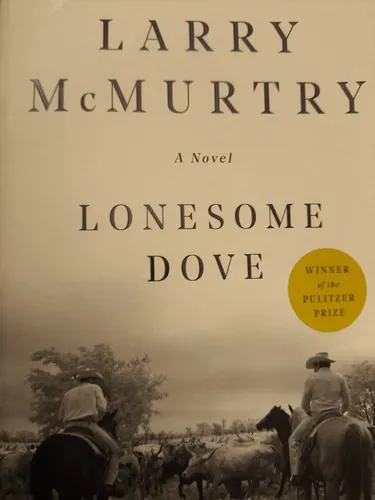
Montana sounds like a rumor until Jake Spoon rides in and starts talking about it. His old friends Augustus McCrae and Woodrow Call, former Texas Rangers, run a livery business on the Texas border, in a town called Lonesome Dove. Call hears Jake out and decides to take a herd of cattle all the way north. Larry McMurtry turns that decision into a long trail novel set in the late 1870s. It brings one American place and decade to life through ordinary work.
History arrives through cowboys doing a hard job, not through famous names or battles. The wide cast and wider map take some tracking. At 858 pages, it is long. It also stands alone, even though McMurtry later added a sequel and two prequels. It won the Pulitzer Prize for Fiction in 1986 and became a CBS miniseries in 1989. Begin it on a free weekend, and expect it to claim a few more.
Pages: 858 (Simon & Schuster, 2010 edition)First published: 1985Historical fiction, WesternAwards: Pulitzer Prize for Fiction, 1986Adaptation: CBS miniseries, 1989
1. Wolf Hall, by Hilary Mantel
Best for: Tudor politics from the inside
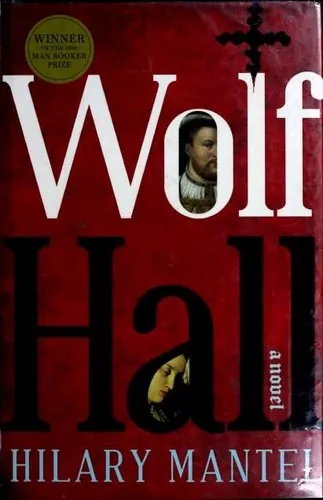
Thomas Cromwell begins as a blacksmith's son in Putney, beaten by his father and leaving home. Years later he serves Cardinal Wolsey, and when Wolsey falls from the favor of Henry VIII, Cromwell rises. Hilary Mantel tells it in a close present tense that sits just behind Cromwell's eyes. The Tudor court feels like a room you are standing in. That closeness is why it tops the list.
Period detail, real politics and a fully alive central character arrive together, and no page stops to lecture. It won the Booker Prize in 2009 and the Walter Scott Prize in 2010. BBC Two adapted it as a series in 2015. The caveat is the pronoun. Mantel often calls Cromwell simply "he," and the first chapters take some adjusting. Stay with it, because the habit soon becomes part of the closeness. This is the first of three novels, and the trilogy is complete. You can read straight through to the end without waiting for anything.
Pages: 640 (Picador, 2021 edition)First published: 2009Historical fictionAwards: Booker Prize, 2009; National Book Critics Circle Award for Fiction, 2009; Walter Scott Prize, 2010Adaptation: BBC Two series, 2015
| Rank | Title | Author | Year | Pages | Best for |
|---|---|---|---|---|---|
| 1 | Wolf Hall | Hilary Mantel | 2009 | 640 | Tudor politics from the inside |
| 2 | Lonesome Dove | Larry McMurtry | 1985 | 858 | Westerns and trail stories |
| 3 | Beloved | Toni Morrison | 1987 | 360 | Book clubs and close readers |
| 4 | War and Peace | Leo Tolstoy | 1869 | 1273 | A long winter read with a big cast |
| 5 | The Name of the Rose | Umberto Eco | 1980 | 579 | Mystery fans who like ideas |
| 6 | Pachinko | Min Jin Lee | 2017 | 512 | Multigenerational family sagas |
| 7 | I, Claudius | Robert Graves | 1934 | 468 | Court intrigue in ancient Rome |
| 8 | Half of a Yellow Sun | Chimamanda Ngozi Adichie | 2006 | 543 | History told through one household |
| 9 | All the Light We Cannot See | Anthony Doerr | 2014 | 544 | Newcomers to historical fiction |
| 10 | Shōgun | James Clavell | 1975 | 998 | A long adventure in 1600 Japan |
Frequently asked questions
What counts as historical fiction on this list?
We counted novels set well before the time their authors wrote them, where real events shape what happens to the characters. That is why Beloved, published in 1987 and set in 1873, qualifies. War and Peace counts too, since Tolstoy published it in 1869 about the wars of 1805 to 1812.
Which of these books is best for someone new to historical fiction?
Start with All the Light We Cannot See. Its chapters are short, its two main characters are easy to tell apart, and its 544 pages move quickly. If you prefer a single strong narrator, I, Claudius is the next best first step.
What are the best historical fiction books for book clubs?
Beloved, Pachinko and Half of a Yellow Sun give groups the most to discuss. Each follows a family or household through a period of upheaval. Beloved is the shortest of the three at 360 pages, and its looping timeline gives a group plenty to piece together. Pachinko adds a 2022 Apple TV+ series to compare.
Have any of these books been adapted for the screen?
Nearly all of them have. FX released a Shōgun series in 2024, decades after an NBC miniseries in 1980. Netflix adapted All the Light We Cannot See in 2023, and Apple TV+ adapted Pachinko in 2022. Older versions include the 1989 CBS miniseries of Lonesome Dove and the 1976 BBC series of I, Claudius.