
How well a winner reads today mattered more than how famous it is when we chose the best Pulitzer Prize winning novels. Each entry gives the year the book won and says plainly where it has aged unevenly.
The Pulitzer Prize for fiction has a long record, and that record includes some books that feel new and some that have gathered dust. This list is for readers who want the winners that still hold up. We went through the prize history with one test in mind: would a thoughtful reader enjoy this book now? Pace and attitudes counted as much as the craft the jury rewarded. The picks cover the prize's whole century, from a 1921 winner to a 2025 one, with one book per author. Lengths run from 256 to 858 pages. Each entry gives the year the book won the prize, which is often a year after it was published, plus the page count of an edition you can buy today. Where a famous winner has aged unevenly, we say so plainly.
Reads well now: pace, voice and attitudes hold up for a reader today.
Visible craft: what the Pulitzer jury rewarded is still clear on the page.
Range: winners from across the prize's history, from 1921 to 2025, with one book per author.
Lasting life: decades in print, screen versions or continued attention since the prize.
Our full method, including how we check every book fact against two sources, is on the How We Pick page.
As an Amazon Associate, TenVolumes earns from qualifying purchases.
10. James, by Percival Everett
Best for: The newest winner, a fresh angle on a classic
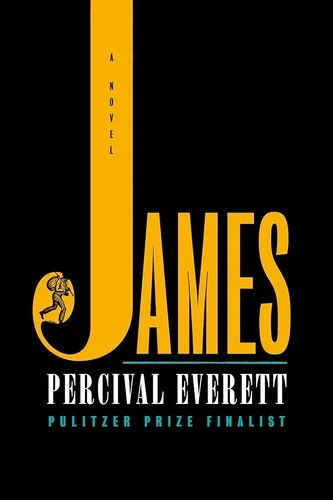
Huck is still here, and so is the raft on the Mississippi River. What Percival Everett changes in this retelling of Adventures of Huckleberry Finn is the voice. Jim, the enslaved man from Twain's novel, now narrates his own story. His reason for running comes early. He hears he will soon be sold, which would cost him his wife and their daughter.
Seeing the trip from inside Jim's head changes the meaning of nearly every scene. The novel won the National Book Award for Fiction in 2024 and the Pulitzer in 2025. It is the newest book here, and nobody can yet say how it will age. That is the one honest mark against it here. Everything else on the list has had years, often decades, to prove itself.
At 320 pages it moves fast. You do not need to have read Twain first, but if you have, the contrast will sharpen every chapter. Slavery and its violence run through the whole story.
Pages: 320 (Doubleday, 2024 edition)First published: 2024Literary fiction, historicalAwards: Pulitzer Prize for Fiction, 2025; National Book Award for Fiction, 2024
9. Gilead, by Marilynne Robinson
Best for: A quiet, reflective novel in letter form
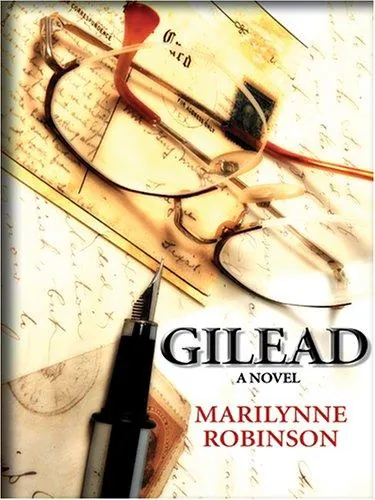
One long letter makes up this whole novel, written by a minister near the end of his life for his young son. The Reverend John Ames sets it down in 1956, aware that his time is short, and he fills it with the men who came before him. His grandfather was a minister who fought for abolition in Kansas. His father was a preacher and a pacifist.
Around those stories Ames records what a long life has taught him about faith, and about fathers and sons. Marilynne Robinson won the 2005 Pulitzer for it, and its calm voice has worn better than many louder winners. Very little happens, though. Readers who need events to keep turning pages will struggle, especially early on.
Anyone who likes to underline will fill the margins of its 256 pages. Three companion novels followed, Home, Lila and Jack, and each one stands alone, so Gilead is complete by itself.
Pages: 256 (Picador, 2020 edition)First published: 2004Literary fictionAwards: Pulitzer Prize for Fiction, 2005
8. The Age of Innocence, by Edith Wharton
Best for: A sharp novel of manners from the prize's early years
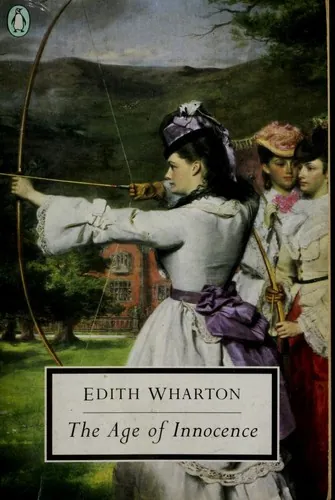
The New York of the 1870s in this novel is a small, polished world with firm rules. Countess Ellen Olenska unsettles it simply by coming home without the husband she has left. Newland Archer feels it more than anyone. He is engaged to May Welland, Ellen's proper cousin, and his certainty starts to slip. Edith Wharton turns that disturbance into a study of everything a closed society can do without raising its voice.
It is the oldest book on this list. The 1921 prize, then called the Pulitzer Prize for the Novel, had never gone to a woman before Wharton. The social pressure it describes still feels familiar, even if the dinner parties do not. The pace is deliberate, and much of the drama lives in what people leave unsaid.
Martin Scorsese filmed it in 1993, and the film makes a good companion. The Penguin Classics edition runs 368 pages and suits readers who like irony delivered politely.
Pages: 368 (Penguin Classics, 1996 edition)First published: 1920Literary fiction, novel of mannersAwards: Pulitzer Prize for the Novel, 1921Adaptation: Film directed by Martin Scorsese, 1993
7. The Amazing Adventures of Kavalier & Clay, by Michael Chabon
Best for: A big, generous novel about comics and escape
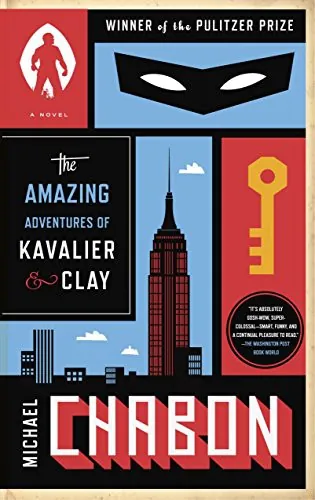
Two cousins in Brooklyn dream up the Escapist, a comic book hero who battles fascists, and their work on him carries this novel. Sammy Clay already lives there. Joe Kavalier has just reached New York in 1939 as a refugee from Prague, where he trained in magic and escape artistry. His family is still trapped in that city under Nazi occupation.
Michael Chabon builds a long, warm novel around that gap between fantasy and fact. It is the most plainly enjoyable winner of this century so far, full of jokes and the energy of a young industry. The 2001 Pulitzer rewarded a book that takes popular art seriously without making it solemn. Size is the drawback.
The current paperback runs 704 pages, and the story stretches across many years. Readers who love early comic books, or who simply want a story about friendship and work, will forgive the detours.
Pages: 704 (Random House Trade Paperbacks, 2012 edition)First published: 2000Literary fiction, historicalAwards: Pulitzer Prize for Fiction, 2001
6. The Underground Railroad, by Colson Whitehead
Best for: History with one bold invention
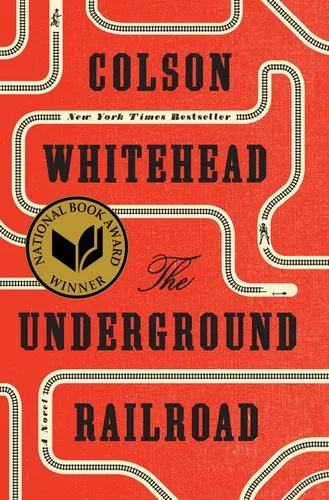
Cora decides to run from the Georgia plantation where she is enslaved, and Caesar, a more recent arrival, goes with her. The escape route Colson Whitehead gives them is his one big change to American history. The Underground Railroad is literal here, with tracks laid in tunnels under the South and railroad men to keep the trains running. Each stop takes her somewhere new.
That single invention lets the book move like an adventure while it looks hard at what slavery did. It won the National Book Award in 2016, then the Pulitzer and the Arthur C. Clarke Award in 2017, a rare pairing of literary and science fiction prizes. The violence of slavery is shown directly, and some chapters are hard to sit through.
The 336-page paperback reads quickly. Barry Jenkins directed a limited series for Prime Video in 2021, and it makes a strong second pass once you know the story.
Pages: 336 (Anchor Books, 2018 edition)First published: 2016Literary fiction, historicalAwards: Pulitzer Prize for Fiction, 2017; National Book Award for Fiction, 2016; Arthur C. Clarke Award, 2017Adaptation: Prime Video limited series directed by Barry Jenkins, 2021
5. The Grapes of Wrath, by John Steinbeck
Best for: Readers who want the Depression up close
Short interchapters break up this novel, pulling back from one family to show a whole migration on the move. The family is the Joads, tenant farmers in Oklahoma. In the Dust Bowl years they lose their place on the land and set out for California in search of work. John Steinbeck gives them the long chapters.
That double structure is why the book has aged so well. You get one family close up and a country in motion. It won the 1940 Pulitzer, and John Ford's film came out the same year. The interchapters also slow the plot, and the pace is unhurried.
The Penguin Classics edition runs 528 pages, with an introduction and notes by Robert DeMott that help with the history. Readers who care about work, money and who gets left behind will find it more current than its age suggests.
Pages: 528 (Penguin Classics, 2006 edition)First published: 1939Literary fiction, historicalAwards: Pulitzer Prize for the Novel, 1940Adaptation: Film directed by John Ford, 1940
4. To Kill a Mockingbird, by Harper Lee
Best for: A classic courtroom story told by a child
Scout Finch is six when this story begins, and she narrates it with a child's bluntness. Home is Maycomb, Alabama, during the Depression of the 1930s. Her father, Atticus, takes on the defense of Tom Robinson in a trial that tests the whole town. Tom is Black, and the charge against him, raping a white woman, is false. Harper Lee mixes childhood adventures with the courtroom, all through Scout's eyes.
It won the Pulitzer in 1961, and Gregory Peck played Atticus in the 1962 film. A modern reader will likely notice one problem. The story belongs almost entirely to the Finches, and Tom Robinson stays at its edge. Critics have argued about that framing for years.
The book still holds up on Scout's voice, which is funny and exact, and for the courtroom chapters. The 336-page paperback is a fine first Pulitzer winner for teens and adults alike.
Pages: 336 (Harper Perennial Modern Classics, 2006 edition)First published: 1960Literary fiction, coming-of-ageAwards: Pulitzer Prize for Fiction, 1961Adaptation: Film starring Gregory Peck, 1962
3. Lonesome Dove, by Larry McMurtry
Best for: A long Western built on a friendship
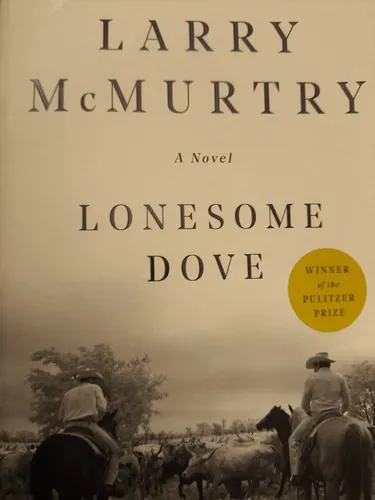
Jake Spoon rides into a Texas border town talking about Montana, and the talk is enough. The town is Lonesome Dove. Two old friends of his live there, Woodrow Call and Augustus McCrae, retired Rangers who now run a livery business. Call decides they will drive a herd of cattle north to that country, and the long trail of the late 1870s becomes the novel. Larry McMurtry won the 1986 Pulitzer for it.
It may be the most readable book the prize has rewarded. The friendship between the two old Rangers carries the whole thing, from Texas all the way to Montana. Size is the obvious caveat: the 25th anniversary paperback runs 858 pages, the longest book on this list. Yet the story keeps moving, because the drive gives every chapter a destination. Readers who think they do not like Westerns are the ones this pick is for. A sequel and two prequels followed, but this book stands alone. The 1989 CBS miniseries is a good reward once you finish.
Pages: 858 (Simon & Schuster, 2010 edition)First published: 1985Western, historical fictionAwards: Pulitzer Prize for Fiction, 1986Adaptation: CBS miniseries, 1989
2. The Road, by Cormac McCarthy
Best for: A short, bleak novel about a father and son
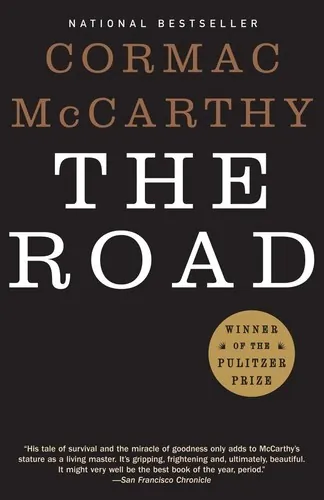
No quotation marks appear anywhere in this novel, and nobody in it has a name. A man and his small boy are heading south on foot toward the coast, across a burned-out country. Cormac McCarthy never says what happened to it. So every exchange between the two feels bare and fragile.
It won the 2007 Pulitzer, and it has aged into something larger than its genre. Strip away the ash and it is a book about what a parent owes a child when there is nothing left to give. It also helps that it is short: the Vintage paperback runs 304 pages. Be ready for real darkness, since the publisher's own description mentions bands of cannibals on the roads. A 2009 film with Viggo Mortensen followed. If you read one recent winner, make it this one.
Pages: 304 (Vintage International, 2007 edition)First published: 2006Literary fiction, post-apocalypticAwards: Pulitzer Prize for Fiction, 2007Adaptation: Film starring Viggo Mortensen, 2009
1. Beloved, by Toni Morrison
Best for: The winner that rewards a modern reader most
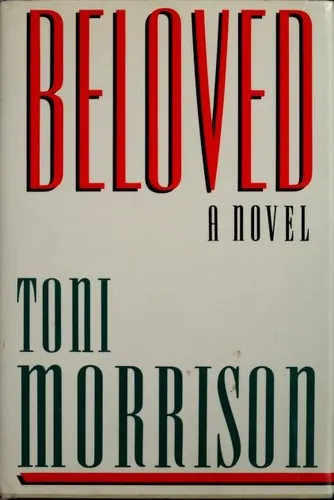
The year is 1873. Sethe and her daughter Denver live outside Cincinnati, and they do not live alone: the spirit of a dead infant fills the place. Years before, she escaped from Sweet Home, a farm in Kentucky where she was enslaved. The book does not move in a straight line, and old scenes surface whenever something in Sethe's day calls them back. Toni Morrison won the Pulitzer for it in 1988, and no winner on this list feels more alive to a reader now.
The ghost story pulls you forward. The history underneath it, of what slavery did to mothers and children, is what stays. It asks for patience, since the timeline only comes into focus slowly and some scenes need a second look. Content warning: the book deals with the violence of slavery, including sexual violence and the death of a child.
The Everyman's Library edition runs 360 pages. A film followed in 1998, but the novel is the place to begin.
Pages: 360 (Everyman's Library, 2006 edition)First published: 1987Literary fiction, historicalAwards: Pulitzer Prize for Fiction, 1988Adaptation: Film, 1998
| Rank | Title | Author | Year | Pages | Best for |
|---|---|---|---|---|---|
| 1 | Beloved | Toni Morrison | 1987 | 360 | The winner that rewards a modern reader most |
| 2 | The Road | Cormac McCarthy | 2006 | 304 | A short, bleak novel about a father and son |
| 3 | Lonesome Dove | Larry McMurtry | 1985 | 858 | A long Western built on a friendship |
| 4 | To Kill a Mockingbird | Harper Lee | 1960 | 336 | A classic courtroom story told by a child |
| 5 | The Grapes of Wrath | John Steinbeck | 1939 | 528 | Readers who want the Depression up close |
| 6 | The Underground Railroad | Colson Whitehead | 2016 | 336 | History with one bold invention |
| 7 | The Amazing Adventures of Kavalier & Clay | Michael Chabon | 2000 | 704 | A big, generous novel about comics and escape |
| 8 | The Age of Innocence | Edith Wharton | 1920 | 368 | A sharp novel of manners from the prize's early years |
| 9 | Gilead | Marilynne Robinson | 2004 | 256 | A quiet, reflective novel in letter form |
| 10 | James | Percival Everett | 2024 | 320 | The newest winner, a fresh angle on a classic |
Frequently asked questions
Which of the best Pulitzer Prize winning novels should I start with?
Start with The Road if you want something short, or To Kill a Mockingbird if you want a classic. The Road runs 304 pages in the Vintage paperback and reads in a weekend. Beloved, our top pick, is better as a second winner, once you are ready for a book that asks more of you.
Which Pulitzer Prize winning novels of the 21st century are on this list?
Five of the 10 won in this century. They are The Amazing Adventures of Kavalier & Clay (2001), Gilead (2005), The Road (2007), The Underground Railroad (2017) and James (2025).
Why does the prize year differ from the publication year?
The prize usually goes to a book published the year before. To Kill a Mockingbird appeared in 1960 and won in 1961. The Grapes of Wrath was published in 1939 and won in 1940.
Was the Pulitzer for fiction always called that?
No. Early winners received the Pulitzer Prize for the Novel, the award's older name. That is why The Age of Innocence (1921) and The Grapes of Wrath (1940) are listed under the Novel award. Edith Wharton became the first woman to win it, in 1921.