
Each of the best books made into movies here has to hold up on its own, even if you never see the film. The film also has to be well regarded and worth comparing with the page, and every entry includes a plain note on the adaptation.
A good adaptation sends people back to the book. A great one makes the book worth reading even after you know the ending. This list is for readers who loved a film and want the novel behind it, and for readers who like to read first and watch second. Every pick became a feature film. All but one of those films earned Academy Award nominations, and six of them won. For each book we give the film year and say plainly how closely the movie follows the page, because that changes what the book can offer you. Some films are near copies. Others cut subplots, drop the narrator's voice, or move the story's center to a different person. The picks run from 1962 to 2017 and from 256 to 464 pages. They cover crime, comedy, literary fiction and one true story.
The book stands on its own: it has to be worth reading even if you never see the film.
The film is well regarded, judged mainly by its Academy Award record and its reputation since release.
The comparison teaches something: we favored adaptations that cut, change or keep material in ways you can see on the page.
Range: different decades, genres and voices, from crime and comedy to literary fiction and a work of nonfiction.
Our full method, including how we check every book fact against two sources, is on the How We Pick page.
As an Amazon Associate, TenVolumes earns from qualifying purchases.
10. Bridget Jones's Diary, by Helen Fielding
Best for: A light, comic break
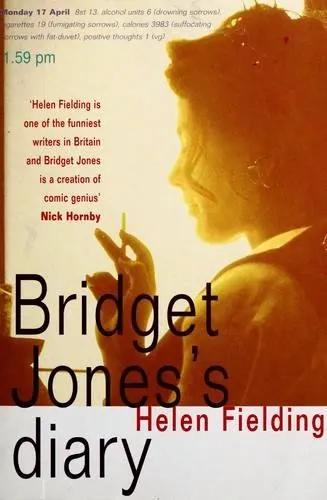
A single woman in her thirties in London keeps a diary for one year, and every small setback goes into it. Helen Fielding first wrote Bridget in an anonymous newspaper column for The Independent, starting in 1995. The novel keeps that dated-entry rhythm, so it reads well in short bursts. So little of its appeal depends on plot. The voice is the whole show, and the 2001 film had to find a way to keep it.
Fielding helped by co-writing the screenplay with Andrew Davies and Richard Curtis. Sharon Maguire directed, with Renée Zellweger, Hugh Grant and Colin Firth in the leads. Zellweger earned an Oscar nomination for Best Actress. A diary has limits as a story, though. You get one voice in short entries, and the plot moves in small steps. Its London also belongs to the mid-1990s, so it now reads partly as a period piece. It is the first book in a series.
Pages: 336 (Penguin Books, 1999 edition)First published: 1996Comic novelAdaptation: Film, 2001
9. The Joy Luck Club, by Amy Tan
Best for: Family stories told in pieces
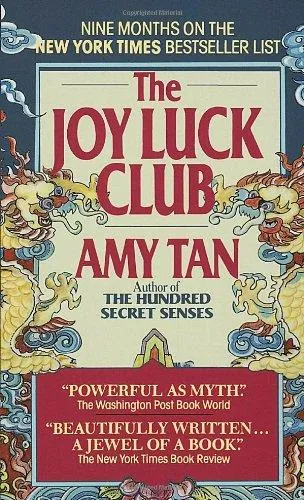
Sixteen linked stories, set out in four sections, make up this novel, and the voice keeps passing between mothers and daughters. The mothers came to San Francisco from China. Since 1949 they have gathered over mah jong under a name of their own, the Joy Luck Club. Their daughters were born in America. Some of the mothers' stories reach back to their early lives in China.
That design makes it an unusual case for this list. A book with so many narrators is hard to film, yet Amy Tan stayed close to the project. She co-wrote the 1993 screenplay with Ronald Bass, and Wayne Wang directed. Watching it after reading shows you which stories the author herself chose to carry forward. The shifting narrators take effort in the early chapters. Keep a note of which daughter belongs to which mother. A reader who wants a single plot line may find the format scattered. If you enjoy family stories told in pieces, you will settle in quickly.
Pages: 352 (Penguin Books, 2006 edition)First published: 1989Literary fictionAdaptation: Film, 1993
8. Jurassic Park, by Michael Crichton
Best for: Seeing what a film leaves out
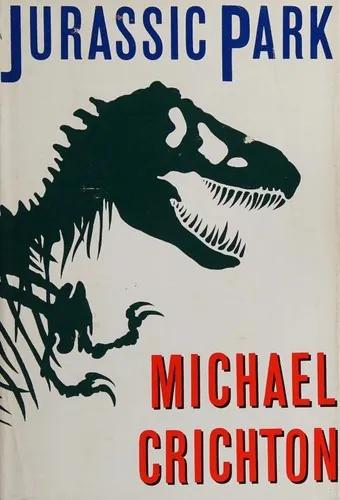
A theme park of cloned dinosaurs sits on Isla Nublar, an island off Costa Rica. Before it opens, a small group of visitors, scientists among them, comes to tour it. Michael Crichton fills that tour with long stretches of scientific explanation. Readers who know only the film will find a colder, more argumentative book. Steven Spielberg's 1993 version cut much of the science talk and the novel's more graphic violence, and it changed several characters.
Crichton shares the screenplay credit with David Koepp. The film won three Oscars, all for sound and visual effects, which says a lot about where its strengths lie. Side by side, the two show how much an adaptation can remove while keeping the premise intact. The catch is that the exposition the film dropped also slows the book's middle chapters. Expect more blood on the page than on the screen. It is the first of two books, followed by The Lost World in 1995.
Pages: 464 (Ballantine Books, 2012 edition)First published: 1990Science fiction thrillerAdaptation: Film, 1993
7. Killers of the Flower Moon, by David Grann
Best for: True crime with a historical frame
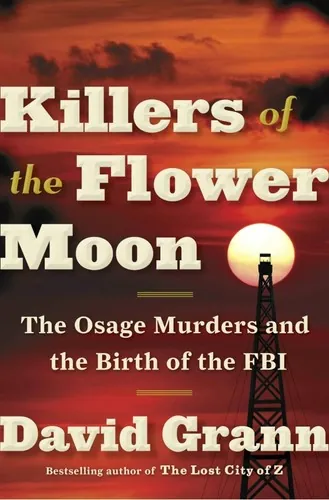
Martin Scorsese's 2023 film of this book made one telling change. Leonardo DiCaprio was first attached to play Tom White, once a Texas Ranger, who led the early FBI investigation. The script later moved its center to Ernest and Mollie Burkhart, and DiCaprio played Ernest instead. The book stays with the case.
Its subject is the murders of Osage people in 1920s Oklahoma, who had grown wealthy after oil was found on their land. This is the only nonfiction pick here, so its people were real, and David Grann's reporting gives you the investigation the film set to one side. The book won the 2018 Edgar Award for Best Fact Crime. The film drew 10 Oscar nominations, including Best Picture and Best Actress for Lily Gladstone, though it won none. The crimes are real and grim, which makes this heavier going than most of the list. Readers who like true crime with a historical frame will get the most from it.
Pages: 416 (Vintage, 2018 edition)First published: 2017Narrative nonfictionAwards: Edgar Award for Best Fact Crime, 2018Adaptation: Film, 2023
6. Room, by Emma Donoghue
Best for: One unusual narrator
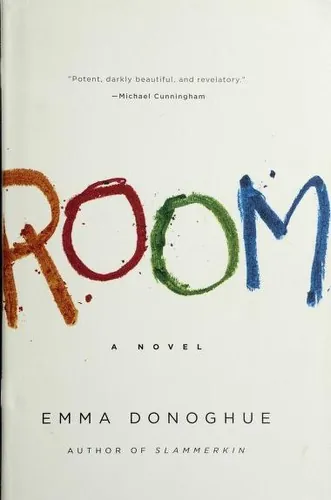
A camera cannot sit inside a five-year-old's head, and that is the problem this novel hands any filmmaker. Jack tells the whole story in the words and logic of a small child. His world is one locked room, shared with his mother, and he has spent his entire life inside it. The film has to rebuild his view from the outside. Emma Donoghue wrote the 2015 screenplay herself, and Lenny Abrahamson directed it.
Brie Larson won the Oscar for Best Actress. The film was also nominated for Best Picture, for directing and for Donoghue's script. Reading the novel first lets you see which parts of Jack's voice she chose to give up. The book was shortlisted for the Booker Prize in 2010. Its premise is captivity, and the subject stays heavy even when Jack's voice is light. If you want to see how far one unusual voice can carry a story, this is the one.
Pages: 352 (Little, Brown and Company, 2011 edition)First published: 2010Literary fictionAdaptation: Film, 2015
5. The Remains of the Day, by Kazuo Ishiguro
Best for: Patient readers who like restraint
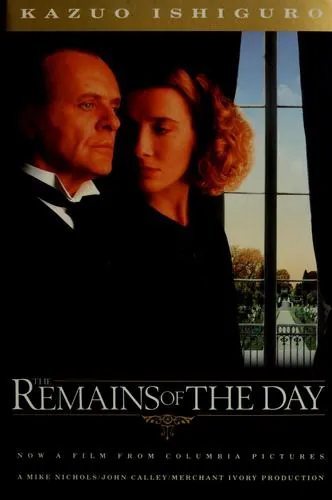
Careful, formal and rarely plain about his feelings, Stevens is a narrator any filmmaker would struggle with. He is the longtime butler of Darlington Hall. The story he tells is mostly memory, the house in the 1920s and 1930s, recalled during a motoring trip he takes in 1956. Kazuo Ishiguro never lets him drop the polish. James Ivory's 1993 adaptation hands that restraint to Anthony Hopkins and Emma Thompson.
It earned eight Oscar nominations, including Best Picture, though it won none. The novel won the Booker Prize in 1989, and Ishiguro received the Nobel Prize in Literature in 2017. The pace is slow by design. The trip is only a frame, and the real action happens in what Stevens remembers and what he avoids saying.
If you like stories built on regret and restraint, this one repays a patient reader. It is also the shortest pick here, at 256 pages.
Pages: 256 (Vintage, 1990 edition)First published: 1989Literary fictionAwards: Booker Prize, 1989Adaptation: Film, 1993
4. Jaws, by Peter Benchley
Best for: Thriller readers who know the film
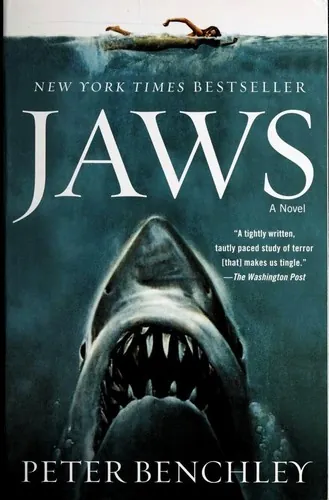
Larry Vaughan, the mayor of Amity, owes money to the Mafia. So when a great white shark starts attacking swimmers off his Long Island resort town, he wants the beaches kept open. Peter Benchley gives the town's money troubles and marriages as much room as the shark. Steven Spielberg's 1975 film kept the spine and threw out a surprising amount.
Gone is the affair between Ellen Brody, the police chief's wife, and the visiting oceanographer Matt Hooper. Gone too are the mayor's debts, and the ending plays out differently. The film won three Oscars, including one for John Williams's score. Reading the novel after the film is like finding an earlier draft of a story you thought you knew. Those subplots slow the middle, though, and you may end up preferring the leaner film. Even so, no pick here shows more plainly how much a director can cut.
Pages: 368 (Ballantine Books, 2013 edition)First published: 1974ThrillerAdaptation: Film, 1975
3. One Flew Over the Cuckoo's Nest, by Ken Kesey
Best for: Readers who have only seen the film
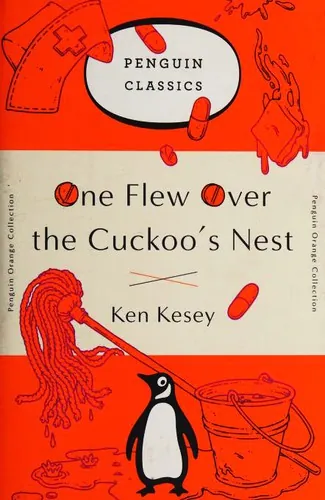
Randle McMurphy is a con man who faked mental illness to escape a work farm. Now he is on a psychiatric ward run by Nurse Ratched. We see him through Chief Bromden, a patient who has spent years pretending to be deaf and mute. Everything turns on that narrator. Milos Forman's 1975 film drops Bromden's first-person voice and watches the ward from the outside.
Ken Kesey left the production after disputes, later sued, and said he never watched the result. The film still won five Oscars, including Best Picture and acting awards for Jack Nicholson and Louise Fletcher. Few pairs on this list differ more in how the same events are told. Read the novel to hear the version Kesey wanted, from a narrator the camera could not keep. The film is so well known that its images are hard to set aside while reading. The book asks you to try, and the effort is worth it.
Pages: 304 (Penguin Classics, 2016 edition)First published: 1962Literary fictionAdaptation: Film, 1975
2. No Country for Old Men, by Cormac McCarthy
Best for: A close book and film match
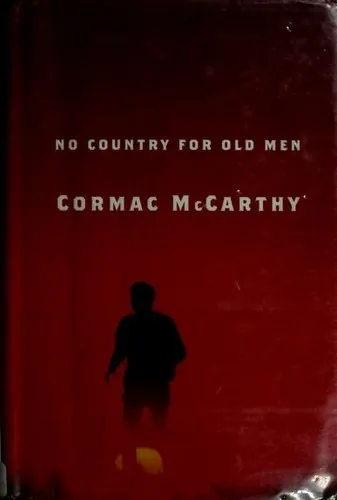
Sheriff Ed Tom Bell opens each section of this novel with a passage of his own reflections, and that voice is what the film leaves behind. The chase itself belongs to two other men. Llewelyn Moss, a hunter and Vietnam veteran, comes across what is left of a failed drug deal near the Texas border in 1980, and he keeps the money. Anton Chigurh, a hitman, comes after him, and Bell trails them both.
Cormac McCarthy writes in lean, hard sentences. Joel and Ethan Coen's 2007 film is widely described as a close adaptation, keeping most of the events and much of the dialogue. It won four Oscars, including Best Picture and Best Supporting Actor for Javier Bardem. Bell's inner voice does not survive as narration, and that is the reason to read the novel even if you know every scene. A near match also leaves less new ground to discover than a looser adaptation would. The killings are frequent and abrupt, so expect a bleak read.
Pages: 320 (Vintage, 2006 edition)First published: 2005Crime novelAdaptation: Film, 2007
1. The Godfather, by Mario Puzo
Best for: Crime fans who want more of the Corleones
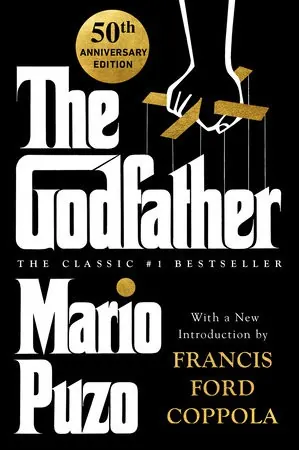
The novel opens in 1945 at the wedding of Connie Corleone, daughter of the New York crime boss Vito Corleone. Her brother Michael starts out with no interest in the family business. Mario Puzo follows how that changes over the next decade, with sections set in Sicily and Las Vegas. Book and film form a true pair here, which is what this list prizes most. Puzo co-wrote the 1972 screenplay with Francis Ford Coppola.
The film won Oscars for Best Picture, for Marlon Brando and for the adapted screenplay. Yet the novel still gives you plenty the film trimmed. The singer Johnny Fontane's Hollywood career gets far more space, and Lucy Mancini's later life in Las Vegas becomes its own thread. Fans of the film will find the Corleone world wider here.
The caveat is that those side stories pull away from the main line, and you may want to skim them. It still reads faster than its 448 pages suggest.
Pages: 448 (Berkley, 2002 edition)First published: 1969Crime novelAdaptation: Film, 1972
| Rank | Title | Author | Year | Pages | Best for |
|---|---|---|---|---|---|
| 1 | The Godfather | Mario Puzo | 1969 | 448 | Crime fans who want more of the Corleones |
| 2 | No Country for Old Men | Cormac McCarthy | 2005 | 320 | A close book and film match |
| 3 | One Flew Over the Cuckoo's Nest | Ken Kesey | 1962 | 304 | Readers who have only seen the film |
| 4 | Jaws | Peter Benchley | 1974 | 368 | Thriller readers who know the film |
| 5 | The Remains of the Day | Kazuo Ishiguro | 1989 | 256 | Patient readers who like restraint |
| 6 | Room | Emma Donoghue | 2010 | 352 | One unusual narrator |
| 7 | Killers of the Flower Moon | David Grann | 2017 | 416 | True crime with a historical frame |
| 8 | Jurassic Park | Michael Crichton | 1990 | 464 | Seeing what a film leaves out |
| 9 | The Joy Luck Club | Amy Tan | 1989 | 352 | Family stories told in pieces |
| 10 | Bridget Jones's Diary | Helen Fielding | 1996 | 336 | A light, comic break |
Frequently asked questions
Which book on this list is closest to its film?
No Country for Old Men is the closest match. The Coen brothers' 2007 film is widely described as faithful, keeping most of the events and much of the dialogue. The main loss is the sheriff's reflective passages, which do not carry over as narration.
Should you read the book or watch the movie first?
Read first when the film changes how the story is told, as with One Flew Over the Cuckoo's Nest or Killers of the Flower Moon. That way you meet the original point of view before the screen version. Watch first when the book adds material, as with The Godfather or Jaws, since the novel then plays like an extended cut.
Did any of these authors write the screenplays?
Yes, several did. Mario Puzo co-wrote The Godfather with Francis Ford Coppola, and Emma Donoghue wrote the screenplay for Room herself. Amy Tan co-wrote The Joy Luck Club with Ronald Bass, and Helen Fielding shared credit on Bridget Jones's Diary. Michael Crichton is credited on Jurassic Park alongside David Koepp.
Which pick is the shortest read?
The Remains of the Day is the shortest, at 256 pages in its Vintage International edition. One Flew Over the Cuckoo's Nest and No Country for Old Men each run just over 300 pages. The longest pick is Jurassic Park, at 464 pages in its 2012 mass market edition.