
You don't need a specialist background for any of the best nonfiction books below, only curiosity about science, history or a life told from the inside. Every pick rests on solid evidence, and each is here because it can shift how you see the world.
Good nonfiction teaches you something. The best nonfiction changes the way you look at things afterward, from the spray on a neighbor's lawn to the history of the city you live in. That second quality is what we ranked. We started with more than 30 candidates from award records, library and publisher catalogs and long-running review outlets. The final 10 split across science, history and memoir. They run from 1946 to 2018 and from 184 to 640 pages, so a book you can finish in an evening sits beside one that takes weeks. None of them needs a specialist background. Each entry says plainly where a book is dense, where its claims have been questioned, and where the subject matter is heavy. If science is your main interest, our list of the best popular science books gives each pick a difficulty rating.
Perspective: how much the book changes the way a reader sees the world afterward.
Evidence: how well it is reported or researched, and how honest it is about its limits.
Readability: whether a general reader can finish it without a specialist background.
Range: a balance of science, history and memoir, and of eras and voices.
Our full method, including how we check every book fact against two sources, is on the How We Pick page.
As an Amazon Associate, TenVolumes earns from qualifying purchases.
10. Educated, by Tara Westover
Best for: Memoir readers
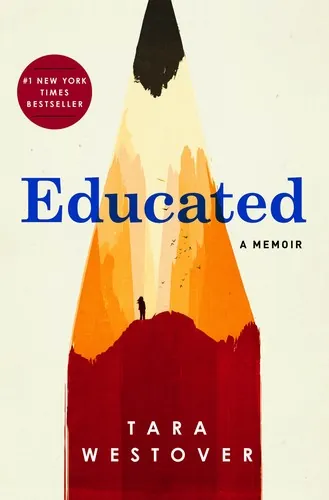
For Tara Westover, education meant learning that her own family's account of the world could be wrong. Her parents were survivalists in Idaho. She had no formal lessons of any kind until 17, when she followed a brother's lead and tried college. Those studies eventually carried her to Harvard and to a PhD at Cambridge. The degrees are the easy part of the story.
The hard part is home, where a brother's violence toward her went unchecked by everyone around them. That violence is on the page, so go in prepared. Speaking up cost her a great deal, and the book is honest about the price. Its lesson is personal rather than global, so on a list about seeing the world differently it comes first in the countdown, not last.
Readers drawn to stories of self-invention will find plenty here. Published in 2018, it is the newest book on the list, and the Random House paperback runs 368 pages.
Pages: 368 (Random House Trade Paperbacks, 2022 edition)First published: 2018Memoir
9. Thinking, Fast and Slow, by Daniel Kahneman
Best for: Readers curious about decision-making
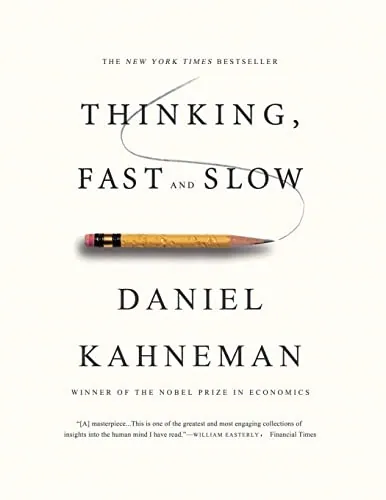
Most of the judgments you make in a day arrive before you notice making them. Daniel Kahneman calls that quick, automatic mode System 1. The slower mode, the one that takes effort, he calls System 2. With that pair in hand, the book walks through the shortcuts and biases that trip up the fast mode. Later come regression to the mean and prospect theory, the work behind his Nobel Prize.
Seeing your own errors named is the shift this book offers. It also has two honest problems. Some priming studies in the chapter called The Associative Machine later failed to replicate, and Kahneman himself said he had put too much faith in underpowered studies. The chapters on risk, statistics and probability are also heavier going than the rest.
The Farrar, Straus and Giroux paperback runs 512 pages. Read it a few chapters at a time, and watch for the biases in your own week.
Pages: 512 (Farrar, Straus and Giroux, 2013 edition)First published: 2011Psychology
8. Killers of the Flower Moon, by David Grann
Best for: True-crime readers who avoid history
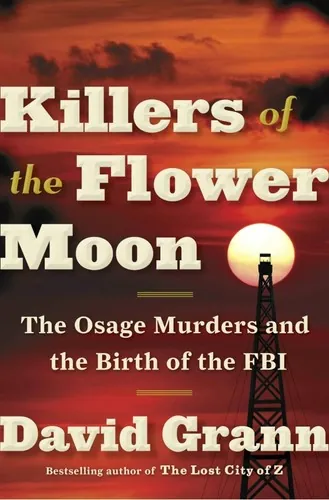
Crime-fiction readers who avoid history books should try this one first. Its subject is a run of killings in 1920s Oklahoma, where the victims were Osage people made wealthy by the oil under their land. David Grann follows the deaths and then the early FBI investigation into them, so for long stretches the book moves like a detective story. That pull carries you into history almost without noticing.
A chapter of the American West many readers never learned ends up at the center of the picture, and the period looks different afterward. It won the Edgar Award for Best Fact Crime in 2018, and Martin Scorsese's film followed in 2023. The scope is narrower than most picks here: one community in one era.
Murder and greed run through every chapter. The Vintage paperback is 416 pages, and the case keeps you reading to the last of them.
Pages: 416 (Vintage, 2018 edition)First published: 2017Narrative nonfictionAwards: Edgar Award for Best Fact Crime, 2018Adaptation: Film directed by Martin Scorsese, 2023
7. A Brief History of Time, by Stephen Hawking
Best for: Readers who want the biggest questions
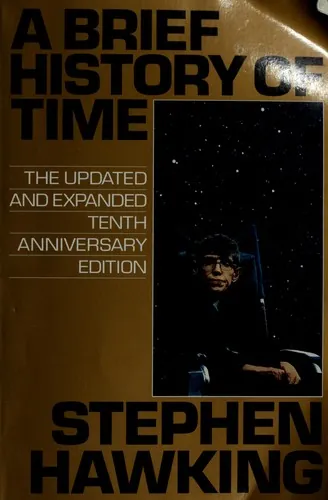
Stephen Hawking set out to explain the universe to people with no physics background. He covers the big bang, what black holes are, the nature of time, and what a unified theory would mean. Published in 1988, it is the most ambitious science book on this list. It changes how you see things at the largest scale available, since few readers think about where time came from before they open it.
The trouble is that the ideas stay difficult even in plain words. Expect to reread some pages, and do not worry if a chapter only half lands the first time. Hawking wrote for general readers, and the book rewards patience more than background.
The Bantam paperback runs 240 pages, short for its subject, so it suits a reader willing to go slowly. A notebook helps, and so does reading one chapter a night instead of racing to the end.
Pages: 240 (Bantam, 1998 edition)First published: 1988Science, cosmology
6. The Immortal Life of Henrietta Lacks, by Rebecca Skloot
Best for: Readers interested in medicine and ethics
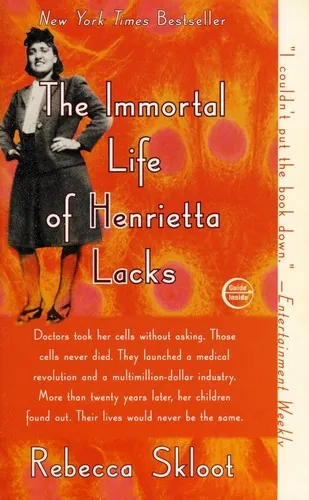
Rebecca Skloot's first book grew out of years spent with one family, above all Henrietta's daughter Deborah. Henrietta Lacks farmed tobacco in the South. In 1951 doctors removed some of her cells, and nobody asked her. In the lab those cells kept dividing, and as HeLa they became the first human cells to do so indefinitely.
Her relatives found out only decades later, and they never saw any of the money. Because Skloot worked so closely with them, the family's questions sit beside the science rather than behind it. That is how the book changes the way you think about consent in medicine: through one named woman, not statistics. Its scope is a single life, which limits its reach but makes it the easiest way into science told through people.
HBO made a film of it in 2017 with Oprah Winfrey. The Crown paperback runs 400 pages, and a family left out of its own story is heavy material.
Pages: 400 (Crown, 2011 edition)First published: 2010Science, historyAdaptation: HBO film starring Oprah Winfrey, 2017
5. Hiroshima, by John Hersey
Best for: Readers who want one essential piece of journalism
On August 31, 1946, The New Yorker gave over its whole issue to a single piece of reporting. John Hersey had gone to Hiroshima and found six people who lived through the atomic bomb of August 6, 1945. Two were doctors. One was a German Catholic priest, another a Methodist minister. The last two were a clerk and a seamstress who had lost her husband.
Hersey moves between them from the moment of the blast onward, in plain sentences that leave the judging to you. That restraint is the book's power. Figures about the bomb stay abstract, but six named people do not, and you come away thinking differently about nuclear weapons. It came out as a book the same year.
The Vintage paperback runs 208 pages and closes with a chapter Hersey wrote about 40 years later, when he went back to find the survivors. One sitting will do it, though the subject is heavy.
Pages: 208 (Vintage, 2020 edition)First published: 1946Journalism, history
4. The Warmth of Other Suns, by Isabel Wilkerson
Best for: Readers who want history told through lives
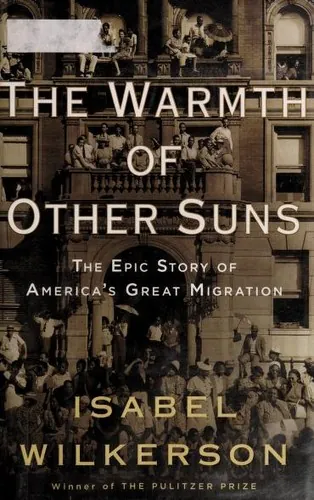
A textbook usually gives the Great Migration a paragraph. Isabel Wilkerson gives it a whole book, told mostly through three people. Ida Mae Gladney left Mississippi for Chicago in 1937. George Starling went from Florida to Harlem in 1945, and Robert Foster from Louisiana to California in 1953. Around them she sets the larger movement: about six million Black Southerners who resettled across the rest of the country between World War I and about 1970.
More than 1,000 interviews stand behind that wider picture. In her hands, a movement many readers met in passing becomes a series of hard personal choices that shaped families for generations. It changes how you see American cities and American history at once. It won the National Book Critics Circle Award for General Nonfiction.
Size is the caveat. At 640 pages the Vintage paperback is the longest book here, though three lives to follow give it the pull of a novel.
Pages: 640 (Vintage, 2011 edition)First published: 2010HistoryAwards: National Book Critics Circle Award for General Nonfiction, 2010
3. Sapiens: A Brief History of Humankind, by Yuval Noah Harari
Best for: Readers who like big arguments
Yuval Noah Harari tries to tell the history of our whole species in one book, organized around the cognitive, agricultural and scientific revolutions. The central argument is the one that sticks. Humans came to dominate the planet because they can cooperate in huge numbers, and they manage it by believing shared stories. Money, nations and gods are, in his telling, imagined orders that work because people agree to believe in them.
Once you see the world that way, it is hard to stop seeing it. It is also the pick to read most critically. Reviewers and scholars note that Harari moves beyond the documented record into speculation and opinion.
The Hebrew original appeared in 2011 and the English edition in 2014. The Harper Perennial paperback runs 464 pages. Read it as a provocation, then look up the claims that surprise you most.
Pages: 464 (Harper Perennial, 2018 edition)First published: 2011History, anthropology
2. Man's Search for Meaning, by Viktor E. Frankl
Best for: Readers facing hard times
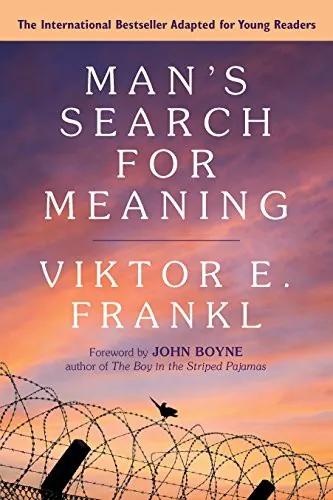
Viktor Frankl, a psychiatrist, was imprisoned in Nazi concentration camps. In 1946 he published this short book in German about what he saw there and what he took from it, and the first English edition followed in 1959. Part one is his account of life in the camps. Part two introduces logotherapy, the approach he built on the idea that a search for meaning is what carries people through.
It asks the largest question on this list in the fewest pages: what makes a life bearable when nearly everything else has been taken away. The plain style keeps attention on that question. The first part deals with life and death in the camps, so it is heavy reading despite its length.
The second part shifts to explaining his method, a change of tone worth expecting. The Beacon Press paperback runs 184 pages, the shortest book here.
Pages: 184 (Beacon Press, 2006 edition)First published: 1946Memoir, psychology
1. Silent Spring, by Rachel Carson
Best for: Anyone who wants to see the world differently
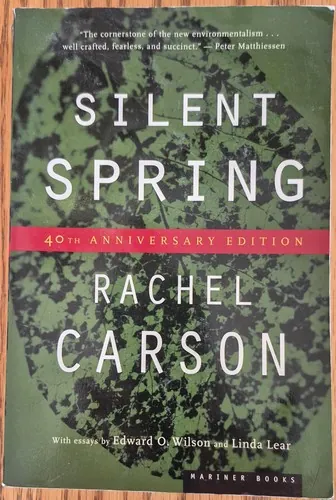
Rachel Carson's book documents what DDT and other synthetic pesticides were doing to wildlife and to whole ecosystems. It first ran in The New Yorker in June 1962 and appeared as a book that September. This book did more than change readers' minds. It helped spark public concern about the misuse of pesticides, and in 1972 the Environmental Protection Agency ordered the cancellation of DDT.
Few books on any list can point to a result like that. It also changes how you see ordinary things: a sprayed lawn, a roadside ditch, a quiet morning in spring. Carson builds her case from evidence rather than from a single story, and readers who want a narrative with characters should know that going in.
The rewards come from the weight of the case. The Mariner Books Classics paperback runs 400 pages, and it remains a model of science writing that argues without shouting.
Pages: 400 (Mariner Books Classics, 2002 edition)First published: 1962Science, environment
| Rank | Title | Author | Year | Pages | Best for |
|---|---|---|---|---|---|
| 1 | Silent Spring | Rachel Carson | 1962 | 400 | Anyone who wants to see the world differently |
| 2 | Man's Search for Meaning | Viktor E. Frankl | 1946 | 184 | Readers facing hard times |
| 3 | Sapiens: A Brief History of Humankind | Yuval Noah Harari | 2011 | 464 | Readers who like big arguments |
| 4 | The Warmth of Other Suns | Isabel Wilkerson | 2010 | 640 | Readers who want history told through lives |
| 5 | Hiroshima | John Hersey | 1946 | 208 | Readers who want one essential piece of journalism |
| 6 | The Immortal Life of Henrietta Lacks | Rebecca Skloot | 2010 | 400 | Readers interested in medicine and ethics |
| 7 | A Brief History of Time | Stephen Hawking | 1988 | 240 | Readers who want the biggest questions |
| 8 | Killers of the Flower Moon | David Grann | 2017 | 416 | True-crime readers who avoid history |
| 9 | Thinking, Fast and Slow | Daniel Kahneman | 2011 | 512 | Readers curious about decision-making |
| 10 | Educated | Tara Westover | 2018 | 368 | Memoir readers |
Frequently asked questions
What are the best nonfiction books of all time?
Our list is led by Silent Spring by Rachel Carson, published in 1962. It documented the harm done by DDT and other synthetic pesticides and helped spark public concern about their misuse. In 1972 the EPA ordered the cancellation of DDT. Man's Search for Meaning is our second pick.
What is a good first nonfiction book for someone who mostly reads fiction?
Try Hiroshima or Killers of the Flower Moon. Hiroshima is 208 pages and follows six survivors. Killers of the Flower Moon reads like a detective story and runs 416 pages.
Which books on this list are the hardest to read?
A Brief History of Time and Thinking, Fast and Slow ask the most of a general reader. Hawking's ideas stay difficult even in plain language, and Kahneman's later chapters on risk and probability are denser than the rest.
How did we choose these nonfiction books?
We scored more than 30 candidates on four points: how much each changes the way you see the world, the strength of its evidence, readability, and range. Facts such as page counts, awards and publication dates were checked against at least two independent sources.