
High school science is all you need for the best popular science books on this list, which put real research into plain words for curious adults. Every pick comes with a difficulty rating, from easy to hard, so you can choose where to start.
Popular science is writing about research for readers who never chose a science career. The good ones get the facts right and still make you want the next chapter. This list is for adults who want a short, reliable place to start, and the only background it assumes is high school science. The 10 picks cover physics, cosmology, evolution, medicine, neurology, ecology, animal senses and mathematics, with one book per author. Each entry names the field and gives a plain difficulty rating, from easy to hard. Lengths run from a 96-page physics primer you can finish in an evening to a 720-page history of cancer. Where a famous title is harder than its reputation suggests, we say so. Every pick rests on real research, and its core ideas have held up. For memoir, history and other true stories, see our nonfiction list.
Clarity: a reader with high school science can follow the whole book.
Substance: the book rests on real research, and its main ideas have held up.
Range: the 10 picks spread across different fields, with one book per author.
Staying power: prizes, new editions or decades in print show lasting value.
Our full method, including how we check every book fact against two sources, is on the How We Pick page.
As an Amazon Associate, TenVolumes earns from qualifying purchases.
10. A Brief History of Time, by Stephen Hawking
Best for: Readers ready for a harder physics classic
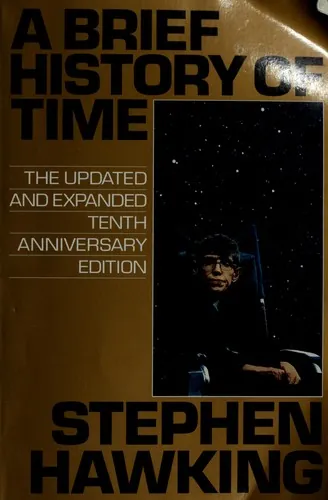
Readers with no physics training were the audience Stephen Hawking had in mind for this 1988 book, and he set himself a hard task. He wanted to explain the largest questions in cosmology without leaning on equations. The tour starts with the origin of the universe and ends with the search for a single theory that would join all of physics. Black holes and the nature of time fill the chapters in between.
The Bantam paperback is only 240 pages, so the challenge lies in the ideas rather than the length. On a list built around clear explanation, this is the famous title that asks more than its reputation suggests. The middle chapters are the densest reading on this page, because new concepts arrive faster than the analogies can carry them. Field: cosmology, rated moderate to hard. If that sounds daunting, read the Rovelli lessons at number 9 first, then come back. Readers who enjoy a puzzle that pushes back will get the most from it.
Pages: 240 (Bantam, 1998 edition)First published: 1988Science, cosmology
9. Seven Brief Lessons on Physics, by Carlo Rovelli
Best for: A one-evening introduction to modern physics
Seven short pieces make up this book, each about the length of a newspaper column. That is what they started as. Carlo Rovelli wrote them for the Sunday supplement of the Italian paper Il Sole 24 Ore. He starts with Einstein's general relativity and ends with a reflection on where people fit in the universe. In between come the tiny building blocks of matter and the strange physics of black holes.
He also takes on the unsolved puzzle of quantum gravity. Simon Carnell and Erica Segre translated the Italian, and the Riverhead hardcover runs just 96 pages. No other pick here takes you from nothing to the open questions of modern physics in a single evening, which is exactly what some newcomers need. The price of that speed is depth. Rovelli sketches rather than explains, so you finish with a feel for the ideas more than a working grasp of them. Field: physics, rated easy. Try it if you want a taste before committing to anything longer, or if a thicker book once defeated you.
Pages: 96 (Riverhead Books, 2016 edition)First published: 2014Popular science, physics
8. Fermat's Enigma, by Simon Singh
Best for: Mathematics told as a detective story
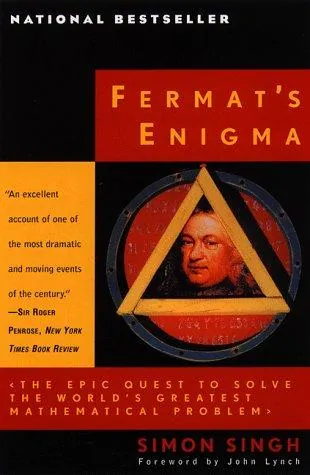
Andrew Wiles finished the proof in the 1990s, and Simon Singh spends this book showing why nobody had managed it since the 17th century. The claim itself is short. An equation of the form x to the n plus y to the n equals z to the n has no whole-number answers once n is bigger than 2. You need nothing beyond school algebra to follow that, and Singh rarely asks for more.
He walks through the failed attempts, so a proof becomes the plot and each failure adds suspense. It is also the only mathematics pick on the list. The book grew out of Singh's documentary about the proof, shown in the US on PBS's Nova, and it keeps a film's sense of pace. Field: mathematics and its history, rated easy to moderate.
The Anchor paperback runs 336 pages. British readers will know it by its original title, Fermat's Last Theorem.
Pages: 336 (Anchor, 1998 edition)First published: 1997Popular science, mathematics
7. An Immense World, by Ed Yong
Best for: Nature lovers curious about animal minds
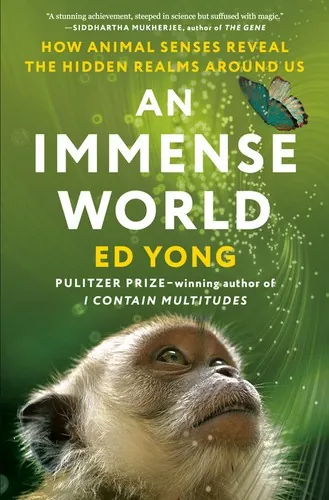
Ed Yong builds this book around a German word, Umwelt, meaning the part of the world a given animal can actually sense. A bat's Umwelt is built partly from echoes, while ours is dominated by sight. The chapters take the senses one at a time. Some are familiar from our own bodies, and others, such as a feel for the planet's magnetism, have no equivalent in us at all. The point Yong keeps returning to is that our own view is just as partial as any other animal's.
It won the 2023 Andrew Carnegie Medal for Excellence in Nonfiction, and, published in 2022, it is the newest book on this list. The explanations stay clear because Yong anchors every strange ability in a specific animal you can picture. The drawback is shape, not quality.
The 464-page hardcover piles example on example, which suits browsers more than readers who want one tight argument. Field: animal biology, rated easy to moderate. Anyone who has watched a dog sniff a lamppost and wondered what it was getting will enjoy this.
Pages: 464 (Random House, 2022 edition)First published: 2022Popular science, animal sensesAwards: Andrew Carnegie Medal for Excellence in Nonfiction, 2023
6. The Man Who Mistook His Wife for a Hat, by Oliver Sacks
Best for: A first book about the brain, told through patients
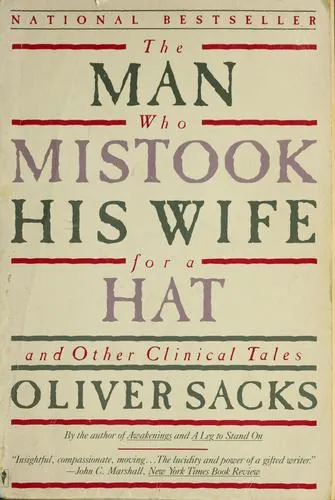
Each chapter here tells the story of one person, as seen by the doctor who treated them. Oliver Sacks wrote about people the way a novelist writes about characters, and this 1985 collection follows brains that work in unexpected ways. One patient's memory has failed. Another can see a familiar face or a household object and still not name it. A few combine serious impairment with an unusual gift.
Each tale is short, so you can read one and put the book down. For neuroscience, this is the gentlest door on the list, because Sacks begins with a person rather than a part of the brain and lets the science arrive through the story. The Everyman's Library hardcover from 2023 runs 344 pages, with an introduction by Atul Gawande. Field: neurology, rated easy. One limit is worth knowing. These are separate cases, not a survey, so you will not come away with a map of how the brain works. Readers drawn to medicine or psychology should start here.
Pages: 344 (Everyman's Library, 2023 edition)First published: 1985Popular science, neurology, case histories
5. The Sixth Extinction, by Elizabeth Kolbert
Best for: Understanding the extinction crisis through field reporting
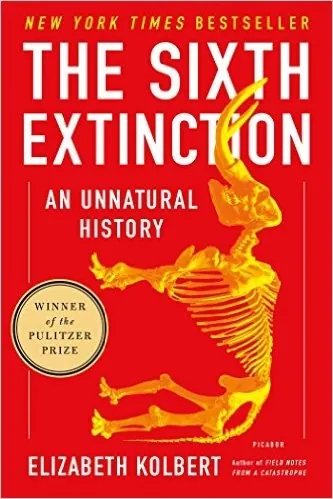
A golden frog in Panama, the great auk and the Sumatran rhino each anchor a chapter of this book, and Elizabeth Kolbert goes into the field to report on them. Her argument is that our species is now causing a mass die-off. By her count, it is the sixth in the planet's history. Because she travels to each site, the book reads partly as travel writing and partly as science history. It won the Pulitzer Prize for General Nonfiction in 2015.
What it does best is turn a vast and abstract trend into scenes you can picture. A single endangered frog is easier to hold in your head than a global statistic. The Picador paperback runs 336 pages. Field: ecology and earth history, rated easy to moderate. Be ready for a sobering subject, since every chapter is about loss. Pair it with the animal senses book at number 7 for a fuller view of the living world.
Pages: 336 (Picador, 2015 edition)First published: 2014Popular science, ecology, extinctionAwards: Pulitzer Prize for General Nonfiction, 2015
4. The Selfish Gene, by Richard Dawkins
Best for: The big idea behind modern evolutionary thinking
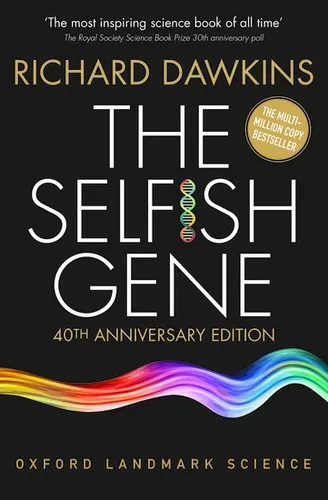
The word meme was born in this book in 1976, coined as a name for a unit of culture that spreads by imitation. That one coinage shows how far Richard Dawkins's ideas have traveled beyond biology. The main argument is about where natural selection really operates. Dawkins puts it at the level of the gene, and an animal, in his account, is something genes build in order to get copied.
The title is a metaphor about how genes spread, not a claim that animals or people are selfish, and the book is careful to say so. Know one thing before you start. This is a single long argument rather than a tour of findings, and it asks for steady attention from start to finish.
The 40th anniversary Oxford edition runs 496 pages and adds a new epilogue. Field: evolutionary biology, rated moderate. Readers who like ideas argued step by step will find it rewarding.
Pages: 496 (Oxford University Press, 2016 edition)First published: 1976Popular science, evolutionary biology
3. The Emperor of All Maladies, by Siddhartha Mukherjee
Best for: Medicine, history and science in one narrative
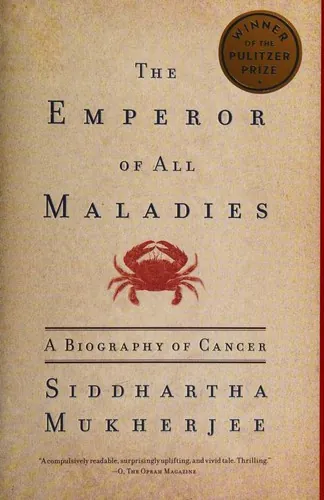
Siddhartha Mukherjee writes about cancer the way a biographer writes about a person, from its first appearance in the record to its latest turn. The earliest written description he finds comes from ancient Egypt. The later chapters reach chemotherapy and modern targeted drugs, along with the doctors and patients who shaped each step. Scenes from his own training as a cancer physician run through the history, which keeps the science tied to real wards and real people. It won the 2011 Pulitzer Prize for General Nonfiction.
In 2015 it became a PBS documentary series, with Ken Burns as executive producer. No other pick here joins biology, medicine and history so clearly in one story. The updated Scribner paperback from 2025 adds four new chapters on the decade and a half after the first edition. Field: medicine, rated moderate.
The caveat is size. At 720 pages it is the longest book on this list, so plan on weeks rather than a weekend.
Pages: 720 (Scribner, 2025 edition)First published: 2010Popular science, medicine, history of cancerAwards: Pulitzer Prize for General Nonfiction, 2011Adaptation: PBS documentary series Cancer: The Emperor of All Maladies, 2015 (Ken Burns, executive producer)
2. Cosmos, by Carl Sagan
Best for: Wonder and the scientific method together
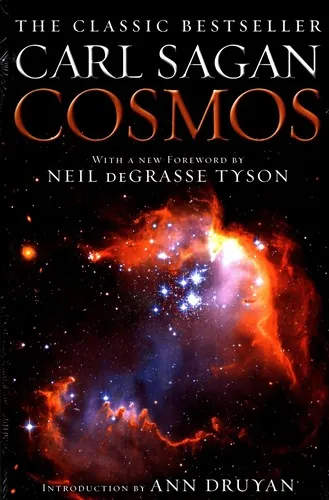
Carl Sagan wrote Cosmos alongside the 1980 PBS series Cosmos: A Personal Voyage, and the book shares its wide-angle view. It begins with the history of astronomy and how the scientific method took shape. From there it moves to the evolution of life, the search for life on other worlds and the exploration of space. Sagan also warns about the danger of nuclear war, a reminder of the years he was writing in. What sets it apart on a list about explanation is the voice.
He writes with open wonder but never loses track of the evidence, and he treats the reader as a partner in the reasoning. Few science books of any era cover this much ground. The current Ballantine paperback runs 432 pages, with a foreword by Neil deGrasse Tyson. Field: astronomy and the history of science, rated easy to moderate. The book dates from 1980, so recent discoveries are missing. Read it for the way of thinking, which still applies.
Pages: 432 (Ballantine Books, 2013 edition)First published: 1980Popular science, astronomyAdaptation: Companion book to the PBS series Cosmos: A Personal Voyage, 1980
1. A Short History of Nearly Everything, by Bill Bryson
Best for: The single best overview of science for a general reader
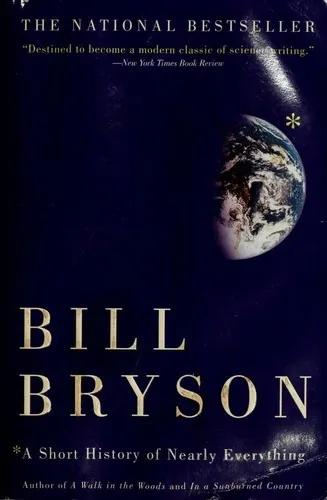
Size comes first in this book, from the scale of the universe down to the atom. Then it works through geology and the history of life, and humans turn up only near the end. Bill Bryson is a travel writer, not a scientist, and that turns out to be the secret of the book. He came to the subject as an outsider trying to understand it, and he brings the reader along on the same terms.
Along the way he sketches many of the scientists behind the discoveries. It won the Aventis Prize for Science Books in 2004. Nothing else here covers so much ground so clearly, and Bryson's humor makes the hard parts go down easily.
The Crown paperback runs 560 pages. Field: general science, rated easy. If you read only one book from this list, choose this one, then follow whichever chapter made you most curious to the specialist books elsewhere on the list.
Pages: 560 (Crown, 2004 edition)First published: 2003Popular science, general scienceAwards: Aventis Prize for Science Books, 2004
| Rank | Title | Author | Year | Pages | Best for |
|---|---|---|---|---|---|
| 1 | A Short History of Nearly Everything | Bill Bryson | 2003 | 560 | The single best overview of science for a general reader |
| 2 | Cosmos | Carl Sagan | 1980 | 432 | Wonder and the scientific method together |
| 3 | The Emperor of All Maladies | Siddhartha Mukherjee | 2010 | 720 | Medicine, history and science in one narrative |
| 4 | The Selfish Gene | Richard Dawkins | 1976 | 496 | The big idea behind modern evolutionary thinking |
| 5 | The Sixth Extinction | Elizabeth Kolbert | 2014 | 336 | Understanding the extinction crisis through field reporting |
| 6 | The Man Who Mistook His Wife for a Hat | Oliver Sacks | 1985 | 344 | A first book about the brain, told through patients |
| 7 | An Immense World | Ed Yong | 2022 | 464 | Nature lovers curious about animal minds |
| 8 | Fermat's Enigma | Simon Singh | 1997 | 336 | Mathematics told as a detective story |
| 9 | Seven Brief Lessons on Physics | Carlo Rovelli | 2014 | 96 | A one-evening introduction to modern physics |
| 10 | A Brief History of Time | Stephen Hawking | 1988 | 240 | Readers ready for a harder physics classic |
Frequently asked questions
What are the best popular science books for beginners?
A Short History of Nearly Everything is the best broad starting point, because Bill Bryson assumes no background at all. If you would rather start small, Seven Brief Lessons on Physics runs 96 pages. Both are rated easy on this list.
What are the best popular science books on physics?
On this list, the physics picks are Seven Brief Lessons on Physics and A Brief History of Time. Read Carlo Rovelli's short book first, then Stephen Hawking's harder one. Cosmos adds astronomy and the history of the field.
Do I need a science background to read these books?
No. Every book here was written for general readers, and most need nothing beyond high school science. The Selfish Gene and A Brief History of Time ask the most of you, which is why we rate them moderate and moderate to hard.
Which of these books have won major prizes?
Four picks won major awards. The Emperor of All Maladies won the Pulitzer Prize for General Nonfiction in 2011, and The Sixth Extinction won it in 2015. An Immense World won the 2023 Andrew Carnegie Medal for Excellence in Nonfiction. A Short History of Nearly Everything won the Aventis Prize for Science Books in 2004.
Sources
- Penguin Random House: A Short History of Nearly Everything by Bill Bryson
- American Library Association: 2023 Andrew Carnegie Medals winners
- Oxford University Press: The Selfish Gene, 40th anniversary edition
- Macmillan: The Sixth Extinction by Elizabeth Kolbert
- Open Library: edition records for the books on this list