
Small type and old words put plenty of adults off, so we chose the best classic books for beginners by one rule: you can finish them and enjoy it. Most run under 250 pages, and each entry names the easiest edition or translation to look for.
Classic novels can look like homework from across the room. Small type, old words and a reputation for difficulty keep plenty of adult readers away. The 10 books below are a gentler way in. Seven of them run under 250 pages, and only two pass 300. The shortest is a 64-page novella you can finish in an evening. Every one tells a real story, so you read for what happens next rather than to check off a famous name. We built the list for people with little classics experience, whether you skipped these books in school or never got around to them. Each entry names an edition or translation that is easy to find and easy to read. The picks run from 1813 to 1958. If you already know the famous titles and want the bigger books, our list of the best classic novels takes over from here.
Readable prose: a newcomer can follow each chapter without a dictionary, even when the style is older.
Manageable length: most picks run under 250 pages, and the longer ones have to earn the extra time.
Reward: the book works as a story in its own right, not only as a famous name to check off.
Easy edition: each entry names an in-print edition or translation that suits a first-time reader.
Range: different eras, countries and voices, so no two picks feel like the same book.
Our full method, including how we check every book fact against two sources, is on the How We Pick page.
As an Amazon Associate, TenVolumes earns from qualifying purchases.
10. The Metamorphosis, by Franz Kafka
Best for: Fans of strange short fiction
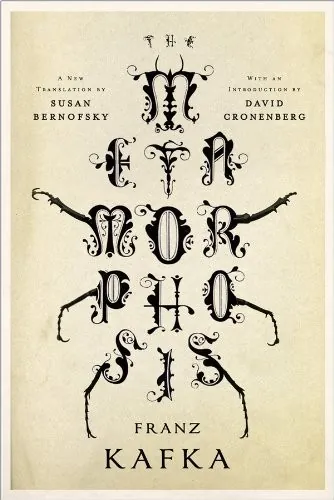
The Samsa household runs on one wage, and it belongs to Gregor. So when he finds he has become a huge insect, his first thoughts are about work. Franz Kafka reports the change calmly, as if it were a scheduling problem, and then watches the family try to adjust. That flat voice around an absurd event is the whole effect. It also makes Kafka far less forbidding than his reputation suggests.
At 128 pages, the story fits into one evening, which is why it belongs on a list for beginners. It is the only translated book here, so the translation matters. We suggest the 2014 Norton edition translated by Susan Bernofsky, whose English is plain and current rather than stiff. The bottom spot comes down to mood. The tone is bleak, the humor is dry to the point of vanishing, and readers who want a satisfying plot may feel cheated. It suits readers who like odd short fiction that leaves them arguing about what it meant.
Pages: 128 (W. W. Norton and Company, 2014 edition)First published: 1915Literary fiction, translated novella
9. Frankenstein, by Mary Shelley
Best for: Horror fans curious about origins
Most people know the monster from the movies, a lumbering figure who barely speaks. Mary Shelley's creature is stranger and sadder than that. He teaches himself to speak and read, then tells Victor Frankenstein his own story in his own words. The novel does not open with either of them. It starts with letters from Robert Walton, an Arctic explorer who meets Victor and hears him out.
So the story reaches you nested inside other stories, and that frame takes a few pages to settle. The cost is real. The prose is formal, the pace is unhurried, and 352 pages is a bigger ask than most picks here. In return, you get a book that keeps asking who is to blame for a creation gone wrong, without ever turning into a lecture.
The Penguin Classics edition, with an introduction and notes by Maurice Hindle, uses the revised 1831 text. Pick it up if the 1931 James Whale film made you curious about where the idea began.
Pages: 352 (Penguin Classics, 2003 edition)First published: 1818Gothic novelAdaptation: Universal film directed by James Whale, 1931
8. The Strange Case of Dr. Jekyll and Mr. Hyde, by Robert Louis Stevenson
Best for: A classic in one sitting
A London lawyer named Gabriel John Utterson cannot stop thinking about a will. His respected friend Dr. Jekyll has named a stranger, Edward Hyde, as his heir, and Utterson sets out to learn why. Robert Louis Stevenson tells the story as a mystery seen over the lawyer's shoulder. The Dover Thrift edition fits the whole thing into 64 pages, the shortest book on this list.
That brevity makes it an easy first taste of fiction from the 1880s. The sentences are older in style, but there are not many of them, and each scene sharpens the same question. The catch is that the secret is famous. Most readers already know how Jekyll and Hyde are linked, so the slow approach to the answer has lost its surprise. What remains is the mood and the closing written accounts, including Jekyll's own statement of the case. Choose it if you want a classic you can finish on a single train ride.
Pages: 64 (Dover Publications, 1991 edition)First published: 1886Gothic horror novellaAdaptation: Paramount film directed by Rouben Mamoulian, 1931
See it on Amazon, The Strange Case of Dr. Jekyll and Mr. Hyde
7. Their Eyes Were Watching God, by Zora Neale Hurston
Best for: Readers who love a strong voice
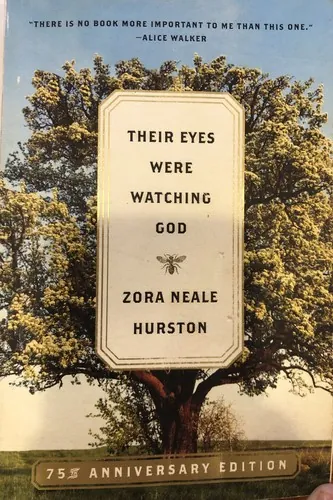
Janie Crawford comes home to Eatonville, Florida, an all-Black town, and sits down with her friend Pheoby to explain where she has been. The novel is that explanation. It follows Janie through three marriages as she looks for a life that feels like her own. Zora Neale Hurston writes the narration in standard English and the dialogue in the Black Southern vernacular of her characters.
That split is the only real hurdle. The dialect can take a couple of chapters to hear clearly, and reading a few lines aloud often helps. Once it clicks, those voices carry the book.
At 219 pages, it is a comfortable length. The Harper Perennial Modern Classics edition adds a foreword by Edwidge Danticat and an afterword by Henry Louis Gates Jr., both useful once you have finished. Readers who want a love story with real stakes, told by a woman who keeps her own counsel, should try it.
Pages: 219 (Harper Perennial Modern Classics, 2006 edition)First published: 1937Literary fictionAdaptation: ABC television film, 2005
6. Things Fall Apart, by Chinua Achebe
Best for: A classic from outside the West
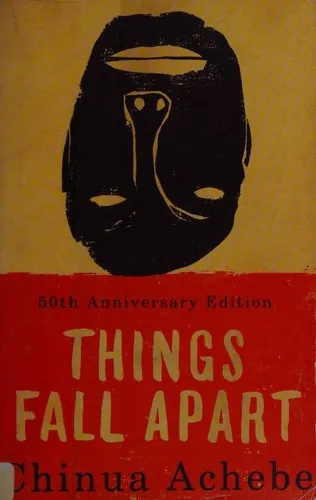
Okonkwo has spent his life trying to be the opposite of his father, Unoka. That fear of weakness shapes nearly every choice he makes. His home, Umuofia, is a fictional Igbo clan in what is now Nigeria. There he is known as a champion wrestler. Chinua Achebe gives much of the novel to the clan's own life before outside pressure arrives.
Later, Christianity and British colonial power come in, and the ground shifts under everyone. Achebe writes in clear, controlled English, which is why a first-time classics reader can settle in quickly. The Penguin Books edition runs 224 pages, well inside our length rule. Two things make it harder going than the picks above it. The early chapters take their time by design, and Okonkwo beats his wives and children, which is hard to read. The book opens the African Trilogy, followed by No Longer at Ease and Arrow of God, but it stands complete on its own. Anyone who wants a classic from outside Europe and America should place it near the top of the pile.
Pages: 224 (Penguin Books, 1994 edition)First published: 1958Literary fiction
5. Fahrenheit 451, by Ray Bradbury
Best for: Readers who like big ideas
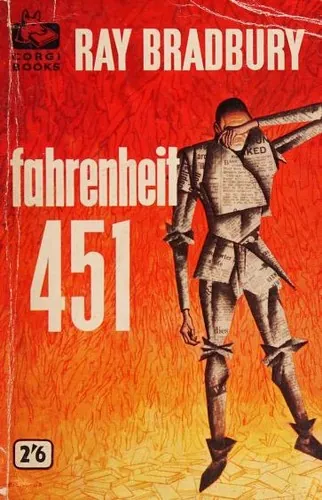
Mildred Montag keeps tiny Seashell radios in her ears and spends her days in a parlor where television fills three walls. She wants a fourth. Her husband, Guy, is a fireman, and in this future that means he burns books. Then a teenage neighbor, Clarisse, makes him question the life he has. Ray Bradbury builds the whole novel on that unease.
His sentences are bright and packed with images, closer to poetry than to dry science fiction. For a newcomer, that means a strong idea, a clear hero and a plot that rarely stalls. Bradbury first published a shorter version, The Fireman, in Galaxy Science Fiction in 1951, then expanded it into the 1953 novel. In 2004 it won the Retro Hugo Award for Best Novel. One caveat: this is the only pick set in an imagined future, so readers who came for period classics may find it an odd fit. The 1966 film directed by François Truffaut makes a good follow-up.
Pages: 256 (Simon and Schuster, 2012 edition)First published: 1953Dystopian science fictionAwards: Retro Hugo Award for Best Novel, 2004Adaptation: Film directed by François Truffaut, 1966
4. Pride and Prejudice, by Jane Austen
Best for: Fans of romantic comedy
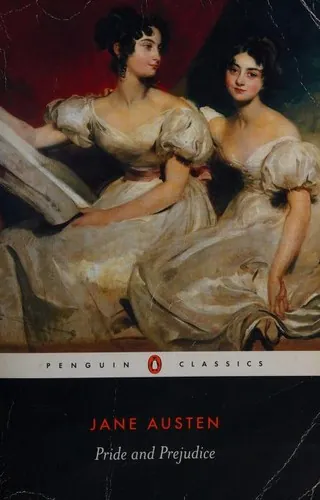
Netherfield Park, a house near the Bennet home, has a new occupant named Mr. Bingley. Mrs. Bennet, mother of five daughters, hopes he will marry one of them. His friend Mr. Darcy is rude to Elizabeth Bennet at a ball, and the rest of the novel puts her low opinion of him on trial. Jane Austen's sentences are longer than modern ones, but they are precise and often very funny.
Much of the comedy sits in conversation, and it moves quickly once you catch the irony underneath. At 448 pages in the Penguin Classics edition, this is the longest pick on our list. Length is what keeps it out of the top three. It is also the oldest, first published in 1813, so its manners take a few chapters to get used to.
The edition helps, with an introduction and notes by Vivien Jones. If you like romantic comedies built on sharp talk, read it first and save the 2005 Joe Wright film for afterward.
Pages: 448 (Penguin Classics, 2002 edition)First published: 1813Romance, comedy of mannersAdaptation: Film directed by Joe Wright, 2005
3. The Great Gatsby, by F. Scott Fitzgerald
Best for: A short, stylish first classic
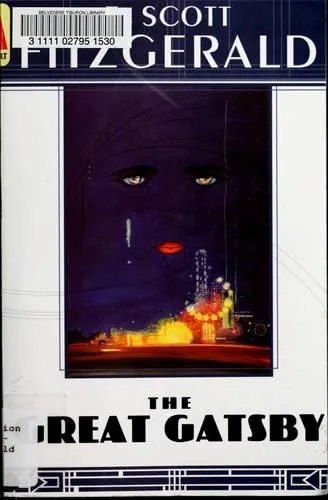
In the summer of 1922, a young Midwesterner named Nick Carraway comes east to learn the bond business. He rents a small house in West Egg, Long Island, next door to the mansion of Jay Gatsby, a man known for lavish parties. Nick tells the story as a neighbor watching from the edge of things, and that makes him an easy guide for a newcomer. F. Scott Fitzgerald keeps the novel tight. The Scribner paperback runs 180 pages, and few scenes are wasted.
For a first-time reader, that economy is a gift. The prose is the challenge. Some paragraphs are dense with images and long, musical sentences, and a few are worth reading twice. Readers who need a likable hero to root for may also find the cast hard to warm to. Read it for a short classic about money and longing. Then compare the two best-known films, Jack Clayton's from 1974 and Baz Luhrmann's from 2013.
Pages: 180 (Scribner, 2004 edition)First published: 1925Literary fictionAdaptation: Film directed by Baz Luhrmann, 2013
2. Animal Farm, by George Orwell
Best for: Readers who enjoy satire
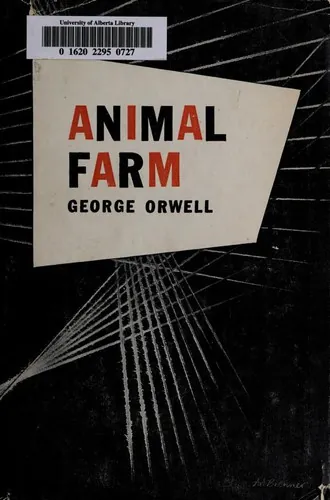
The animals of Manor Farm are fed up with their hard-drinking owner, Mr. Jones, so they drive him off and take over. The pigs end up in charge. You can probably guess the general direction from there, and George Orwell wants you to. The book reads like a fable, with plain words and a plot that never wanders. Under that surface sits a satire of the Russian Revolution and the rise of Stalin.
That two-level design is what makes it so friendly to beginners. You can enjoy the story with no history at all. Later, a short read about the Soviet Union in the 1920s and 1930s brings the second layer into view. The Signet Classics paperback runs 176 pages. It won the Retro Hugo Award for Best Novella in 1996, and Halas and Batchelor turned it into an animated film in 1954. Be aware that talking animals do not make this a children's book. Its view of power is bleak, and the satire has teeth.
Pages: 176 (Signet Classics, 2004 edition)First published: 1945Political satire, fableAwards: Retro Hugo Award for Best Novella, 1996Adaptation: Animated film by Halas and Batchelor, 1954
1. Of Mice and Men, by John Steinbeck
Best for: Your very first classic
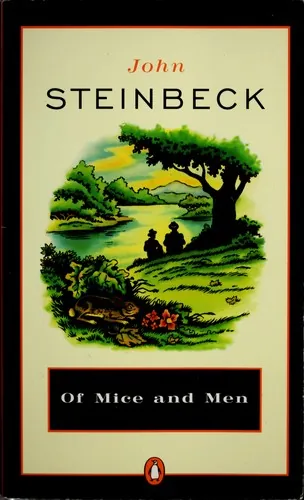
A few acres of their own is the dream that keeps George Milton and Lennie Small going. For now they are laborers in Depression-era California, moving from one ranch job to the next. Lennie is a very big man whose understanding never grew past childhood, and George looks out for him. John Steinbeck published the novella in 1937. A Broadway version opened at the Music Box Theatre the same year.
The whole story runs about 30,000 words, or 112 pages in the Penguin paperback, so you can finish it in an afternoon. Short length, plain working speech and real emotional weight make it our number 1 pick. Nothing here needs footnotes, and no edition guide is required. The caveat is about mood, not difficulty. This is a sad book about men with very little, and Steinbeck does not soften that. Read it if you want a classic that feels urgent from the first page, then try the 1992 film directed by Gary Sinise.
Pages: 112 (Penguin Books, 1993 edition)First published: 1937Literary fiction, novellaAdaptation: Film directed by Gary Sinise, 1992
| Rank | Title | Author | Year | Pages | Best for |
|---|---|---|---|---|---|
| 1 | Of Mice and Men | John Steinbeck | 1937 | 112 | Your very first classic |
| 2 | Animal Farm | George Orwell | 1945 | 176 | Readers who enjoy satire |
| 3 | The Great Gatsby | F. Scott Fitzgerald | 1925 | 180 | A short, stylish first classic |
| 4 | Pride and Prejudice | Jane Austen | 1813 | 448 | Fans of romantic comedy |
| 5 | Fahrenheit 451 | Ray Bradbury | 1953 | 256 | Readers who like big ideas |
| 6 | Things Fall Apart | Chinua Achebe | 1958 | 224 | A classic from outside the West |
| 7 | Their Eyes Were Watching God | Zora Neale Hurston | 1937 | 219 | Readers who love a strong voice |
| 8 | The Strange Case of Dr. Jekyll and Mr. Hyde | Robert Louis Stevenson | 1886 | 64 | A classic in one sitting |
| 9 | Frankenstein | Mary Shelley | 1818 | 352 | Horror fans curious about origins |
| 10 | The Metamorphosis | Franz Kafka | 1915 | 128 | Fans of strange short fiction |
Frequently asked questions
What are the best classic books for beginners to start with?
Of Mice and Men is the easiest strong start on this list. The novella runs about 30,000 words, or 112 pages in the Penguin paperback. If you want something even shorter, the Dover edition of The Strange Case of Dr. Jekyll and Mr. Hyde is 64 pages, though its style is older.
Does the edition or translation of a classic matter?
Yes, especially for older or translated books. Edited editions such as Penguin Classics add an introduction and notes, which helps with Pride and Prejudice and Frankenstein. For a translated book like The Metamorphosis, a recent translation such as Susan Bernofsky's 2014 version reads in plain modern English.
Should I read the book or watch the movie first?
Read the book first if you can. Several picks here have well-known screen versions, including a 1992 film of Of Mice and Men and a 2005 film of Pride and Prejudice. Watching afterward lets you compare the choices each film made without having the story handed to you in advance.
Which of these classics work well for a book club?
Their Eyes Were Watching God and Things Fall Apart both give a group plenty to discuss, from marriage and independence to the arrival of colonial rule. Animal Farm suits a busy month, since it runs 176 pages in the Signet edition. Frankenstein works for a group that likes arguing about who is really to blame.