
None of the best fantasy books for beginners on this list asks for a 10-volume commitment. Each one reads on its own or opens a finished series, and each lets adults and teens learn its world as they go.
The best fantasy books for beginners do two jobs at once. They tell a good story, and they quietly teach you how to read the genre: how invented places, magic and history work on the page. This list is for adult and teen readers who are new to fantasy, or who bounced off a doorstop epic and want a better first try. You won't find a 10-book commitment here. Every pick reads on its own or opens a finished series, and each entry says which. The books span more than eight decades, from 1937 to 2022, and run from 264 to 672 pages. The countdown moves from the most demanding pick at number 10 to the gentlest start at number 1, so you can choose by how much you want to take on. If you already know you like big worlds, our list of the best epic fantasy series is the next step.
Easy entry: the world, its rules and its names can be learned while reading, with no glossary or prologue to study first.
Clear commitment: every pick is a standalone or the first book of a finished series, and the entry says which.
Range: different decades, tones and kinds of fantasy, from fairy tale and myth to heist, comedy and science fantasy.
Craft: each book does something the genre does well, such as a strong narrator, a clear magic system or a vivid sense of place.
Our full method, including how we check every book fact against two sources, is on the How We Pick page.
As an Amazon Associate, TenVolumes earns from qualifying purchases.
10. The Fifth Season, by N. K. Jemisin
Best for: Readers who want a challenge
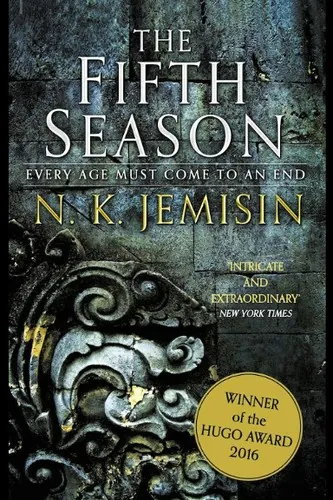
Some chapters of this novel address you directly, in the second person, and that choice tells you N. K. Jemisin is not easing anyone in. Her world is the Stillness, a supercontinent where catastrophic Seasons keep returning, and any one can end a way of life. Orogenes can command the seismic energy behind those disasters, so the Fulcrum keeps them under tight control. One thread follows Essun after a loss at home: her son has been killed, and there is no sign of her girl.
Three threads take time to connect, and no other book here asks as much of a beginner. At 400 pages in the Orbit paperback it is not the longest pick, but it is the densest. It won the Hugo Award for Best Novel in 2016, and The Broken Earth trilogy finished in 2017, so nobody is left waiting for an ending. Choose it if you came to fantasy from literary fiction or hard science fiction. Expect grief and violence, handled without softening.
Pages: 400 (Orbit, 2015 edition)First published: 2015Science fantasyAwards: Hugo Award for Best Novel, 2016
9. Piranesi, by Susanna Clarke
Best for: Literary readers who like puzzles
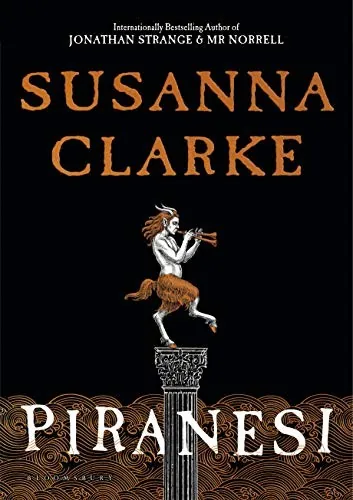
Twice a week the narrator of this novel meets a man he calls the Other. The rest of his time goes into journals, kept with great care, and into the House where he lives. Its halls seem to go on forever, with statues everywhere, while the sea rises through the lowest floors and clouds pass through the highest. Susanna Clarke lets you learn the rules of this place at the same pace he does, which makes it a gentle first step into fantasy. There is no map to memorize and no long cast of names.
At 272 pages in the Bloomsbury paperback, it is also one of the two shortest books on this list. It won the Women's Prize for Fiction in 2021, and it stands entirely alone. The catch is tone. The story is quiet and strange, built from small discoveries rather than battles. Readers who enjoy puzzles and literary fiction will feel at home. Anyone hoping for dragons and sword fights should start higher up.
Pages: 272 (Bloomsbury Publishing, 2021 edition)First published: 2020FantasyAwards: Women's Prize for Fiction, 2021
8. Circe, by Madeline Miller
Best for: Fans of Greek myth
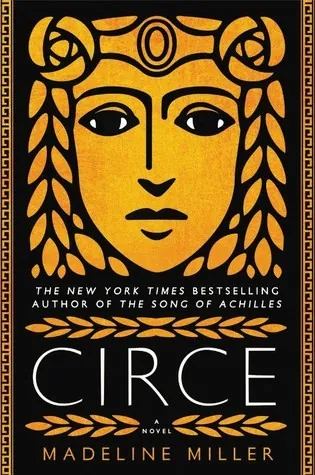
Odysseus, Daedalus and the Minotaur all pass through this novel, but none of them tells it. The voice belongs to Circe, a daughter of Helios, and Madeline Miller follows her across a very long life. Much of that life is spent in exile on Aiaia, an island where she learns witchcraft from the plants around her. For readers who know the myths from school but have never opened a fantasy book, that makes it a natural bridge.
You need no glossary and no map. The magic is slow and earthy, closer to gardening than to spellcasting. The pace is reflective, though, and much of the story stays on one island. The book contains a scene of sexual assault, so know that before you start. If you like literary fiction with a strong first-person narrator, start with this standalone.
Pages: 400 (Little, Brown and Company, 2018 edition)First published: 2018Mythological fantasy
7. Legends & Lattes, by Travis Baldree
Best for: Readers who want low stakes
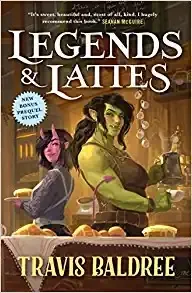
Thune is a fantasy city with the usual hazards, and Travis Baldree ignores most of them. His hero, Viv, is an orc who has spent years as a hired sword. She wants a quieter trade, so she puts down her weapon and opens a café. The book's subtitle promises low stakes, and it keeps that promise. Problems stay local.
A crime boss expects a share of the takings, and someone from Viv's fighting days turns up. For a beginner, that scale is the point. You learn how a fantasy world works from behind one counter, down to a rattkin baker, with no wars or prophecies to track. The Tor paperback runs 304 pages and adds a short story, Pages to Fill. It reads as a standalone, though a prequel, Bookshops & Bonedust, followed in 2023. Be warned that little happens in the usual sense. If you want suspense, look elsewhere on this list. If a cozy evening is the goal, this is the pick.
Pages: 304 (Tor, 2022 edition)First published: 2022Cozy fantasy
6. Guards! Guards!, by Terry Pratchett
Best for: Fans of comic fiction
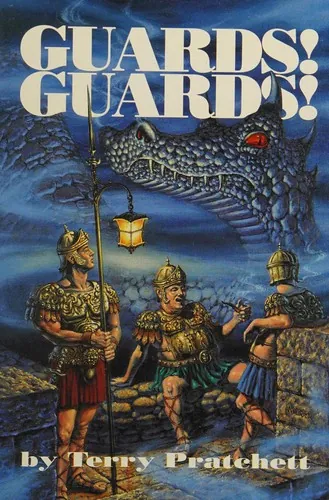
A secret society summons a dragon as part of a plan to put a puppet king on the throne of Ankh-Morpork. Standing in the way is the city's Night Watch: Captain Vimes, Sergeant Colon, Corporal Nobbs and a new recruit named Carrot. Vimes first appears drunk in a gutter, which tells you the Watch is not a crack unit. Discworld is a long series, and its size scares newcomers off.
This book, the eighth, makes a natural starting point because it is the first about the Watch and introduces a fresh cast. Penguin states that the novels can be read in any order. The jokes come fast, but they aim at real targets, such as power and the way crowds behave. One structural quirk is worth knowing: Terry Pratchett skips chapter breaks entirely, which some readers find tiring. If you like comedy with a point, this is the place to begin.
Pages: 416 (Harper, 2013 edition)First published: 1989Comic fantasy
5. A Wizard of Earthsea, by Ursula K. Le Guin
Best for: Readers who like fables
Magic in Earthsea depends on knowing the true name of a thing, an idea simple enough to grasp in a page and deep enough to carry a whole series. Ursula K. Le Guin introduced it in 1968 through Ged, a boy from the island of Gont whose use-name is Sparrowhawk. His gift is raw. At the school for wizards on Roke, a moment of pride brings a shadow into the world.
The story is short, at 264 pages in the current paperback, and the prose has the calm weight of a folktale. That style is also the main caveat. Le Guin tells more than she shows, so readers used to modern, scene-by-scene novels may feel held at a distance. The Earthsea Cycle runs to six books and is complete. This first volume won the Boston Globe-Horn Book Award in 1969. It suits anyone who likes fantasy with a moral at its center.
Pages: 264 (Houghton Mifflin Harcourt, 2012 edition)First published: 1968FantasyAwards: Boston Globe-Horn Book Award, 1969
4. Uprooted, by Naomi Novik
Best for: Lovers of dark fairy tales
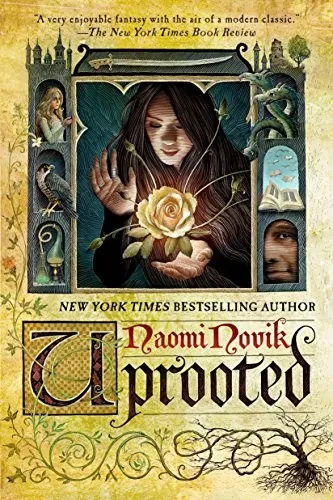
The villain of this novel is not the wizard. Naomi Novik borrows from Polish folklore for the Wood, a corrupted forest that is the real enemy here. The wizard, known as the Dragon, has his own claim on them. Once every 10 years he takes a village girl to his tower. This time the choice falls on Agnieszka, not her friend Kasia.
For a newcomer, that fairy-tale frame is the appeal. You already know the shape of a tower, a forest and a chosen girl, so the new rules arrive on familiar ground. The novel is a standalone and won the Nebula Award for Best Novel for 2015.
The drawback is length: it runs 480 pages in the Del Rey paperback, long for a single volume. The Wood also makes it darker than the opening suggests. Readers who like Grimm stories told straight, with the menace left in, should try it.
Pages: 480 (Del Rey, 2016 edition)First published: 2015FantasyAwards: Nebula Award for Best Novel, 2015
3. Howl's Moving Castle, by Diana Wynne Jones
Best for: A light, funny first fantasy
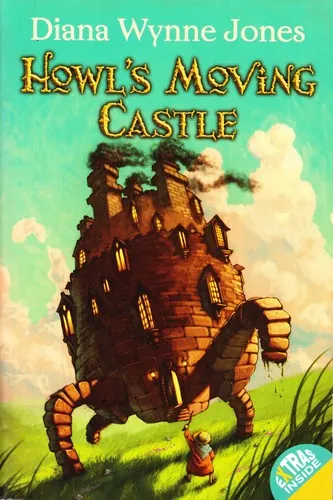
A witch's spell has aged Sophie Hatter far past her years, and her answer is to pick up a broom. The house she means to clean belongs to the wizard Howl, and it refuses to stay in one place. Before long she has also made a deal with his fire demon. Diana Wynne Jones wrote the novel for younger readers in 1986, but adults get just as much from it.
It shows a newcomer how fantasy plays with its own expectations, and it does so lightly. Its fairy-tale rules are there to be bent, and the jokes come from the bending. The book opens a loosely linked series yet reads completely alone.
It is longer than you might expect, at 448 pages in the Greenwillow paperback. If you know the 2004 Studio Ghibli film by Hayao Miyazaki, expect the book to go its own way. Readers who want wit more than battles should start here.
Pages: 448 (Greenwillow Books, 2008 edition)First published: 1986FantasyAdaptation: Studio Ghibli animated film, 2004
2. Mistborn: The Final Empire, by Brandon Sanderson
Best for: Readers ready for epic scale
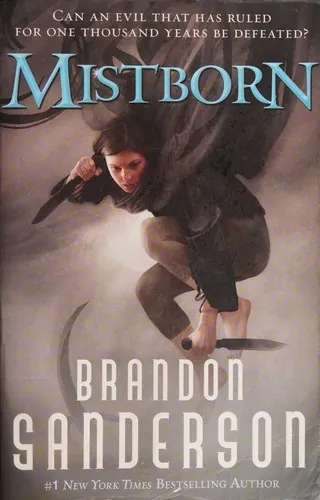
A heist crew sits at the center of this epic, and the target is an entire empire. Vin, a street thief, is the newest recruit. Kelsier brings her in after she learns she can burn metals she has swallowed to fuel a magic called Allomancy. The empire belongs to the Lord Ruler, who is immortal. Under him the skaa peasants live as slaves, and ash has been falling for 10 centuries.
Brandon Sanderson's structure is a gift to beginners. You always know the goal and who is on the team. The magic is learned step by step, through Vin, so you are never ahead of the explanations. Full epic scale in a finished trilogy, the last book out in 2008, is exactly what a cautious newcomer needs.
A later series continues the wider saga with new characters. The caveat is size: 672 pages in the Tor paperback, the longest pick here.
Pages: 672 (Tor, 2014 edition)First published: 2006Epic fantasy
1. The Hobbit, by J.R.R. Tolkien
Best for: Your very first fantasy
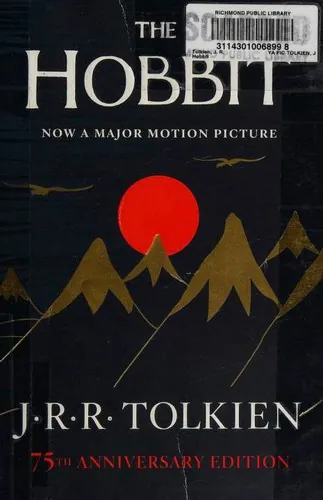
J.R.R. Tolkien wrote this book for children in 1937, and its narrator speaks to you directly, stopping to explain whatever you need to know. That is exactly why it is our first pick for adult beginners too. The plot is a quest. Gandalf the wizard and 13 dwarves need a burglar to help them take their treasure back from Smaug, a dragon.
They settle on Bilbo Baggins, a hobbit who looks nothing like a burglar. The dragon and the band of unlikely companions arrive in 300 pages of plain storytelling, and nobody gets lost along the way. It is also a complete story. You can stop here, or move on to The Lord of the Rings, which is a separate work. One caveat: the tone is lighter than the Peter Jackson film trilogy of 2012 to 2014, and the cast has almost no female characters. The songs and poems can be skimmed without losing the thread.
Pages: 300 (Mariner Books, 2012 edition)First published: 1937FantasyAdaptation: Animated TV film, 1977; live-action film trilogy, 2012 to 2014
| Rank | Title | Author | Year | Pages | Best for |
|---|---|---|---|---|---|
| 1 | The Hobbit | J.R.R. Tolkien | 1937 | 300 | Your very first fantasy |
| 2 | Mistborn: The Final Empire | Brandon Sanderson | 2006 | 672 | Readers ready for epic scale |
| 3 | Howl's Moving Castle | Diana Wynne Jones | 1986 | 448 | A light, funny first fantasy |
| 4 | Uprooted | Naomi Novik | 2015 | 480 | Lovers of dark fairy tales |
| 5 | A Wizard of Earthsea | Ursula K. Le Guin | 1968 | 264 | Readers who like fables |
| 6 | Guards! Guards! | Terry Pratchett | 1989 | 416 | Fans of comic fiction |
| 7 | Legends & Lattes | Travis Baldree | 2022 | 304 | Readers who want low stakes |
| 8 | Circe | Madeline Miller | 2018 | 400 | Fans of Greek myth |
| 9 | Piranesi | Susanna Clarke | 2020 | 272 | Literary readers who like puzzles |
| 10 | The Fifth Season | N. K. Jemisin | 2015 | 400 | Readers who want a challenge |
Frequently asked questions
What is the best fantasy book for a beginner to read first?
The Hobbit is our first choice, because it is short, complete and built around a classic quest. If you would rather start with a book written for adults, try Uprooted or Mistborn: The Final Empire. Readers who come from literary fiction often do best with Circe or Piranesi.
Should a beginner start with a standalone or a series?
Start with a standalone if you are not yet sure the genre is for you. Four picks here are true standalones: The Hobbit, Uprooted, Circe and Piranesi. If you already know you want a long read, Mistborn: The Final Empire and The Fifth Season both open finished trilogies, so you will never wait for a sequel.
Are there fantasy series for beginners that are already finished?
Yes. The original Mistborn trilogy ended in 2008, The Broken Earth trilogy in 2017, and the six-book Earthsea Cycle in 2001. Discworld novels can be read in any order, according to the publisher, so Guards! Guards! works as a starting point on its own.
Is The Hobbit too childish for adult readers?
No, though it was written for children and reads that way at times. The narrator speaks to the reader directly, and the book pauses for songs and poems. Adults tend to enjoy that storyteller's voice once they stop expecting the darker tone of the Peter Jackson films.